2025
Jan
18
Spring sensitivity: hay fever care and dry head spa for a clearer head and face

Spring brings hay fever for many people. Sneezing, itchy eyes and congestion can seriously affect daily life. Sharp temperature and pressure changes also combine with autonomic disturbance, stress and disrupted rhythms, making early spring a sensitive period.
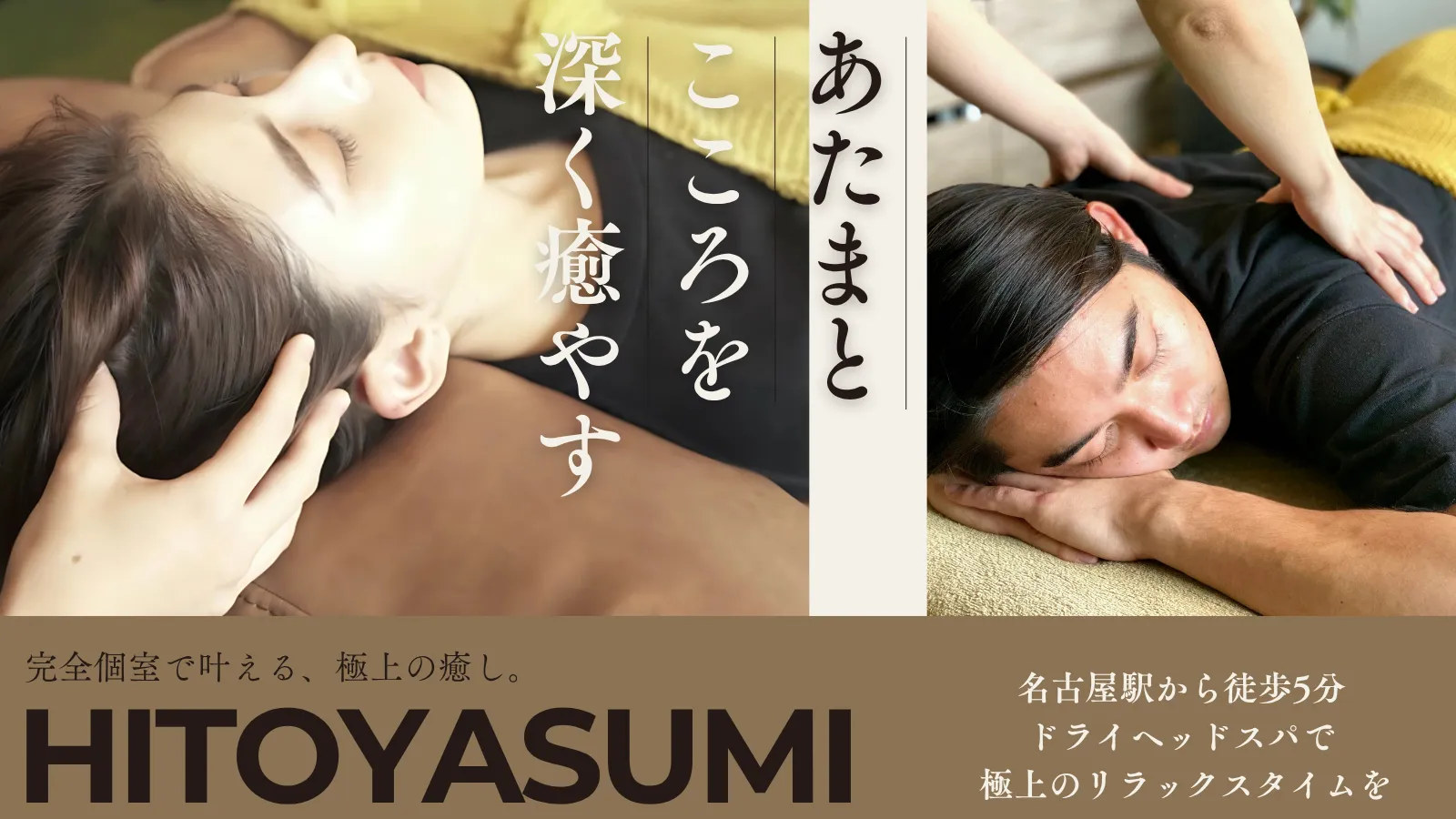
For those wanting to move through it more comfortably, consider a dry head spa. Near Nagoya Station, HITOYASUMI carefully massages the head and neck without water or oil. Better head and facial circulation eases congestion and puffiness, while relaxation may stabilise autonomic function. It also suits hay-fever-related headaches, irritability or sleeplessness.
This article explores dry head spa benefits during pollen season and self-care for a more comfortable spring. Use it for yourself, family or information to share with friends.
What is spring's sensitive period?
The term is often used for spring and autumn. Early spring brings rising temperatures and wide daily differences, alongside graduation, school entry and changes for the new school or business year. Stress and allergies such as hay fever overlap, making autonomic balance more vulnerable.
- Climate changes: differences between morning, evening and daytime and sudden temperature shifts.
- Life changes: unfamiliar environments from education, employment or relocation.
- Pollen dispersal: allergic reactions to cedar, cypress and other pollen.
Spring therefore strains body and mind. Even with the same routine, you may suddenly feel unwell or find allergies worse than expected. Approaches including relaxation, improved circulation and immune support become important.
Main symptoms and a negative cycle
Hay fever is an allergic overreaction when pollen enters the body. Main symptoms include:
- Sneezing, runny nose and congestion
- Itchy or bloodshot eyes
- Sore throat and coughing
- Headache and sluggishness
- Itchy skin and eczema
Symptoms add strain to an already stressful season, leading to secondary effects such as insufficient sleep and reduced concentration. Congestion reduces sleep quality, prevents recovery and impairs next-day performance.
Persistent congestion encourages mouth breathing and dryness in the mouth and throat. Dryness allows viruses and bacteria to enter more readily, increasing the risk of colds or other allergic conditions. This negative cycle makes health management harder during pollen season.
The link with the head and face
Nasal symptoms and itchy eyes get most attention, but head and facial tension and poor circulation are closely involved too. Congestion tends to compress facial muscles and vessels. Repeated sneezing and rubbing the eyes or nose also increase neck, shoulder and back tension.
- Congestion → facial puffiness → headache and sluggishness
- Stiff neck or shoulders → poor circulation → autonomic imbalance → worse allergy symptoms
The head and neck contain many muscles, vessels and nerves. Persistent stress or inflammation causes pain and tension and can affect autonomic balance. This is why circulation-focused dry head spas attract attention in pollen season.
Why a dry head spa can ease symptoms
Better head and facial circulation
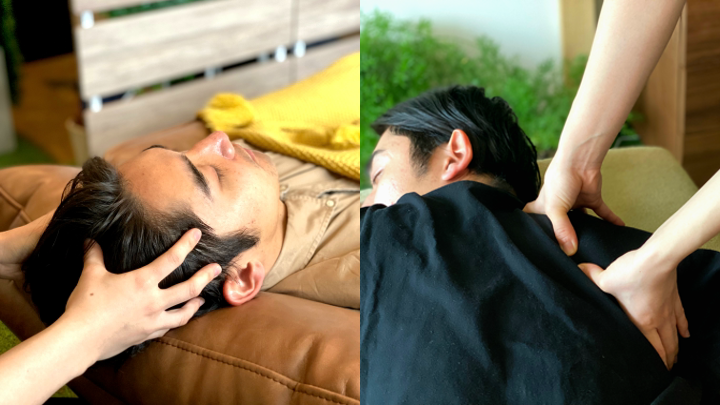
Treatment focuses on the scalp, temples, back of the head and neck with acupressure and massage. Fine vessels in the head are prone to reduced flow under tension. Focused care improves head and facial circulation, potentially easing puffiness and congestion.
In particular, nasal irritation and temple-area headaches common during pollen season may feel better with improved flow. Many guests report a lighter head and clearer eyes afterwards.
Autonomic balance
Temperature differences and hay fever stress easily disrupt autonomic function. The sympathetic system dominates activity and the parasympathetic system rest. Pleasant stimulation from a dry head spa enhances relaxation and is said to encourage parasympathetic dominance.
The head and neck contain important neural systems supporting autonomic control. Appropriate pressure may improve sleep onset, reduce irritability and ease fatigue. For allergy-disrupted sleep, this can offer a starting point for restoring quality rest.
Less puffiness and congestion
Poor head and facial circulation causes not only puffiness but also slower lymph flow near the sinuses, cavities around the nose. Blockage or inflammation there causes congestion. Softening scalp and facial muscles and improving lymph flow can reduce sinus pressure and make breathing easier. Many guests notice a clearer nose after treatment.
HITOYASUMI's dry head spa
Benefits of no water or oil
Ordinary head spas often use a shampoo basin, oil or water. Dry head spa mainly uses manual massage and acupressure without them. No rinsing is needed, making it easy to fit between work or outings.
There is also no sticky oil or cream, and clothes and hair are less disturbed, making it popular with professionals and busy people. No change of clothes or special belongings is needed, useful when you want to carry less during pollen season.
A comfortable setting for hay fever season
HITOYASUMI pays attention to the treatment room's indoor conditions, cleaning and ventilation. Air purification and humidification minimise pollen, dust and other allergens, making visits easier. Many houseplants combine air purification and relaxation.
- Air purifiers and humidifiers
- Frequent cleaning and linen changes
- The soothing effects of plants
Together, these create an oasis valued by returning guests throughout the year, not only pollen season.
Thorough neck and shoulder care too
Allergy-related discomfort can affect the neck, shoulders and back as well as the head. Sneezing and congestion worsen posture and can make stiffness chronic. We therefore loosen neck and shoulder muscles thoroughly during head spa treatment.
Better circulation there also smooths flow to the head and eases allergy-related discomfort. Choosing integrated head, neck and shoulder care can be very useful during pollen season.
Self-care to complement hay fever measures and dry head spa
Warm and cool care for circulation
If the head becomes cold again in everyday life, benefits may diminish. Temperature swings make protection against head and neck chill important.
- Warm: soak in a bath or warm the neck with a steamed towel.
- Cool: cool the eye area before sleep, also helping puffiness.
Combining warmth and cooling appropriately further supports blood and lymph flow and eases discomfort.
Breathing and simple stretches
Congestion often leads to unconsciously shallow breathing. Consider abdominal breathing: expand the abdomen when inhaling and draw it in when exhaling. This enhances relaxation and supports autonomic stability.
Also include simple movements such as regular neck and shoulder rotations and stretching. Even slow neck movement loosens stiffness and encourages flow. If possible, add a few one-minute stretches between work or household tasks.
Support through sleep and food
Hay fever also reflects disturbed immune balance. Improve sleep quality and get proper nutrients to support the body's defences.
- Sleep: avoid phone and computer screens before bed and dim the lights.
- Food: include foods with vitamins C and D and polyphenols.
- Hydration: pay attention to fluid balance, especially with a runny nose.
Better habits combined with head spa relaxation make pollen season more comfortable.
Treatment flow and booking points
Consultation beforehand
HITOYASUMI provides attentive consultation so first-time guests can feel at ease. We ask about allergy symptoms, congestion and headaches and propose care suited to condition and wishes. Linen and room conditions also take allergy sensitivity into account.
Relaxation during treatment
Slow pressure from head to neck and shoulders encourages circulation. Preferences differ, so tell us what you need. With comfortable stimulation rather than excessive pain, parasympathetic activity gradually increases and many guests become drowsy.
Staff regularly check condition and ease of breathing for guests concerned about congestion or coughing, allowing relaxed treatment.
Follow-up consultation and advice
Afterwards, we ask about changes and impressions and explain home self-care and timing for return visits. During severe symptoms, frequent care such as weekly visits is recommended. As the season settles, many continue once or twice monthly, adjusting the pace.
Who may benefit?
- People with pollen-season congestion or headaches
- Persistent irritability or sleeplessness and a sense of autonomic imbalance
- Busy people unable to make relaxation time
- Those wanting less eye fatigue or facial puffiness
- Severe neck and shoulder stiffness with a heavy head
Dry head spas offer strong relaxation for varied concerns. Especially at spring's peak, they can approach both autonomic balance and puffiness, so consider trying one.
Questions about getting through pollen season
Q1. Can a dry head spa cure hay fever?
A. It is not medical treatment and does not cure the allergy itself. However, better head and neck circulation and parasympathetic activity may ease congestion and headaches.
Q2. What if I sneeze or have a runny nose during treatment?
A. Tell staff freely if you cannot hold it back. We prepare tissues and other items for guests during allergy season. There is no need to force yourself to endure it.
Q3. Will makeup or hair be disturbed?
A. Without water or oil, major disruption is unlikely. Scalp massage may change hair volume slightly. If you are hesitant about going out after treatment, bring a hairbrush or styling products or use salon amenities.
Q4. Can I receive treatment while pregnant?
A. Pregnancy makes the body sensitive, but treatment is often possible with a doctor's permission and no health concerns. Consult the salon beforehand and stay within a comfortable range.
Q5. How often should I visit?
A. During severe symptoms, about once weekly is useful for relief. Once they settle, continuing once or twice monthly helps maintain condition.
Final thoughts: a comfortable spring at HITOYASUMI
Pollen season brings not only congestion and headaches but autonomic imbalance and insufficient sleep. At such times, dry head spa circulation and relaxation around the head and face can offer support.
- Focused head and neck care → less congestion and puffiness
- Autonomic balance → less irritability and stress
- Reduced puffiness → a clearer facial appearance and less fatigue
Five minutes from Nagoya Station, HITOYASUMI supports guests with seasonal room preparation and careful consultation. Include dry head spa in self-care to move comfortably through spring's sensitive period.
Releasing discomfort and stress in the head, neck and shoulders may ease allergy-related symptoms and make everyday life brighter and lighter. Deliberately create relaxation time and care for yourself this spring.
Reservations and enquiries
Salon: HITOYASUMI Dry Head Spa & Body Care, Nagoya Station
Access: five minutes on foot from Nagoya Station
Official website: https://hitoyasumi.co/
Hours: weekdays 12:00–21:00; weekends and public holidays 11:00–20:00
Closed: year-end and New Year holidays
As the new school or business year begins alongside pollen season, try a professional dry head spa for a clearer head and mind. Hay fever measures combined with a dry head spa support a comfortable spring.