2025
Feb
09
Stress during a new chapter: causes, effects and dry head spa relaxation

Spring brings new settings and lifestyles for many people: starting school or a job, changing careers or moving home. It is an exciting season, but new relationships, job responsibilities and unfamiliar daily rhythms also bring a sudden increase in sources of stress. One survey reports that around 69.5% have experienced stress from environmental changes at the start of a new chapter.
When such stress accumulates over a long period, it can cause mental and physical discomfort and directly reduce performance and motivation. This article explains the causes and effects of new-life stress, then offers detailed, practical measures. We also focus on relaxation using the increasingly popular dry head spa and explain how it can help manage stress. The advice is useful for many readers, including busy working adults in their 20s to 40s. We invite you to read on.
Why new chapters bring stress
Major life changes such as starting school or a job, changing jobs or moving can make many people tense or anxious. The following are particularly common sources of stress.
- New relationships
Communicating at a new school or workplace means building relationships from scratch with unfamiliar people. One survey found that 53.3% identified relationships as the greatest source of new-life stress. Introducing yourself, being considerate during small talk and worrying about how others judge you can all create substantial psychological pressure. - Changed duties and greater responsibility
A change of duties after changing jobs or departments, or entirely new work as a new employee, takes time and energy to learn. Ministry of Health, Labour and Welfare surveys also show that at least half of working adults feel strong job-related anxiety or stress. Nagoya professionals are no exception: many face pressure across industries, including IT companies and manufacturers. - Changed routines
Moving or starting a new school term can change waking, sleeping and commuting times, another substantial burden. Unfamiliar early starts or late returns can reduce sleep, while irregular meal timing also affects the body, making you more likely to feel generally unwell. - Health worries
New environments can keep both mind and body tense, and many people develop sluggishness, fatigue or gastrointestinal problems. Surveys report that 70% or more experience some physical discomfort during a new-life transition and 80% or more feel anxious about relationships, work duties or health.
When these overlapping sources of stress accumulate, some people develop low mood and reduced concentration known in Japan as “May blues.” Bringing in self-care or professional relaxation early can be key to settling comfortably into a new life.
Effects on body and mental wellbeing
Prolonged intense stress affects the autonomic nervous system and hormone secretion, causing various mental and physical symptoms. Common examples follow.
- Headaches and shoulder tension
Stress-related muscle tension impairs circulation, making neck and shoulder stiffness and tension headaches more likely. Prolonged desk work increases the risk of further worsening. - Digestive discomfort
Stress disrupts autonomic balance and reduces digestive function, making stomach pain, heartburn, diarrhea and constipation more likely. Loss of appetite or, conversely, overeating can also occur, contributing to unstable eating habits. - Insomnia or disturbed sleep
Worries about work or relationships can remain on your mind, keeping sympathetic activity dominant even at night. Many people have trouble falling asleep or wake during the night. Chronic insomnia drains concentration and motivation and can further amplify stress. - Palpitations and dizziness
Excessive stress can raise heart rate and blood pressure, leading to palpitations, breathlessness or dizziness from fluctuating blood pressure. Worrying that these symptoms indicate heart or brain disease can create a vicious cycle of stress. - Reduced immunity and poorer condition
Prolonged excessive secretion of the stress hormone cortisol lowers immunity, making colds or allergies worse and skin problems more likely.
Psychologically, anxiety, depressed mood and difficulty controlling emotions are also common. Stress is not something you can leave alone and simply expect to get used to: early action is essential.
Ways to ease new-life stress
Mindfulness meditation
Mindfulness means focusing on the present moment and allowing thoughts and emotions to pass without judging them. Many studies report reductions in anxiety and stress; some report effects comparable to anti-anxiety medication in treating anxiety disorders.
To begin, five to ten minutes in a quiet place, sitting with good posture and focusing on breathing, is enough. If distracting thoughts arise, stay patient and allow them to pass naturally.
Deep or abdominal breathing
When stressed, take slow deep breaths, allowing plenty of time to exhale. Exhaling favors parasympathetic activity and calms heart rate. A study of five minutes of six-second exhalations and four-second inhalations found reduced salivary amylase, a stress marker. It is easy to practice anywhere, so build the habit of breathing consciously when tense.
Stretching and light exercise
Simple stretches such as circling the shoulders or neck and lengthening the back or lower-back muscles release tension and encourage circulation. Requiring no special equipment or space, they fit easily into work breaks or bedtime routines. Keep breathing and stretch as you exhale for a potentially greater relaxation effect.
Other relaxation methods
- Muscle relaxation: repeatedly tense each muscle firmly, then release it all at once. Becoming aware of tension and release makes relaxation easier.
- Music and aromas: listening to music you enjoy or using a relaxing fragrance can stimulate parasympathetic activity and help stabilize heart rate and blood pressure.
- A lukewarm bath: around 38–40°C is considered a range that warms the body while encouraging relaxation. Consider gentle stretches while taking a leisurely soak.
Whichever method you choose, continuing regularly is important. Even if one session does not feel dramatic, adding a little every day gradually builds stress resilience. For busy professionals in their 20s to 40s, the intention to accumulate small habits is especially important.
Dry head spa: mechanisms and effects
Autonomic balance and relaxation
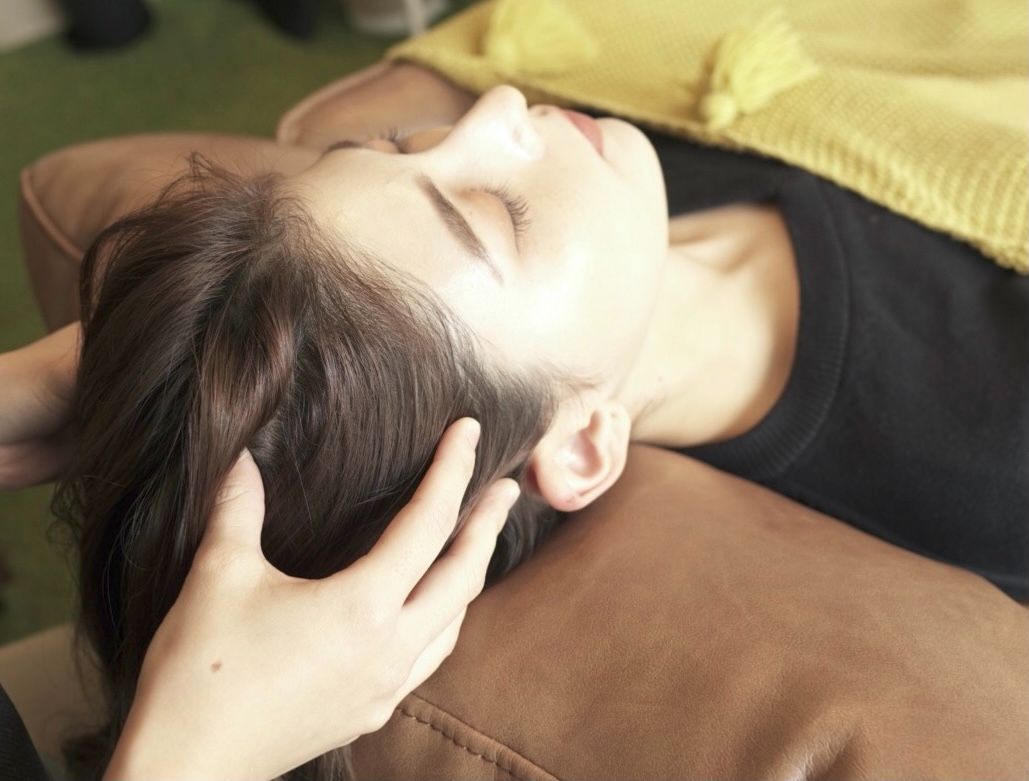
Dry head spa manually loosens the scalp without water or oil. The head contains many pressure points; stimulating them may improve circulation and autonomic balance. Many people feel close to falling asleep during treatment because scalp massage favors parasympathetic activity and leads into relaxation mode.
Headache, neck/shoulder and eye-fatigue relief
A tight scalp can also stiffen neck and shoulder muscles and aggravate headaches, shoulder stiffness and eye fatigue. Many people today use computers or smartphones and develop tension from overusing the neck, shoulders and eyes. Scalp massage encourages circulation and helps release accumulated stiffness. It can also ease fatigue in the focusing muscles behind the eyes, and many people report clearer vision.
Better sleep and less stress
Customers often report sleeping soundly afterward or no longer waking at night. Releasing the scalp improves circulation close to the brain and makes it easier to calm nervous arousal. For people who cannot fall asleep because of stress or anxiety, dry head spa is a promising option for autonomic balance. This positive cycle can also reduce low mood and irritability, supporting comprehensive stress care.
Combining self-care and dry head spa during transition
Combining self-care and professional treatment in balance can efficiently relieve new-life stress. Here are practical self-care methods and ways to combine them with dry head spa.
Self scalp massage and pressure points
- Baihui, at the crown: near the center of the crown, this is a well-known point for autonomic balance and relaxation. Slowly press with the finger pads, hold for three to five seconds and release, repeating the movement.
- Near the temples: loosening the temples in circles can help ease eye strain.
- Hollows at the back of the head, including Fengchi: firm thumb pressure is said to help reduce neck stiffness and headaches.
One to three minutes a day is enough. Choose a relaxing time, such as after bathing or before bed.
Make breathing and stretching habits
Abdominal breathing and gentle stretches require no particular time or place and suit busy working lives. At work, even standing every one to two hours, circling the neck and shoulders and resting tired eyes can help restore autonomic balance.
*“Stretch your muscles while exhaling”* encourages parasympathetic activity. If you want deeper relaxation, combine breathing and stretching.
Review routines and sleep
- Regular sleeping and waking: keep a consistent rhythm at least on weekdays and avoid major disruption on weekends.
- Moderate movement and balanced meals: small habits, such as walking one station on the commute or taking a 15-minute lunchtime walk, build a body more resilient to stress.
- Limit phone and computer use: prolonged smartphone viewing before bed can keep the brain alert because of blue light. Ideally, switch off digital devices 30 minutes before sleeping when possible.
Professional-care frequency and timing
If self-care does not fully remove fatigue or stiffness, dry head spa about once every two weeks is a general guideline.
- Balance time and cost: even monthly care during busy periods can help you maintain your condition when continued regularly.
- When stress or fatigue is pronounced: some people choose focused weekly care. However, leaving at least two days between sessions is considered preferable.
- Timing: treatment at the weekend or after a major event can reset a week’s tension. Booking after work may help you sleep deeply that night and improve next-day performance.
Conclusion: make time to care for yourself during a new chapter
When entering a new environment, people often push too hard, thinking “the beginning matters most,” or worry that they alone cannot settle in. Yet tension and anxiety are natural. What matters is not enduring or ignoring stress, but releasing it appropriately through a combination of self-care and professional treatment.
- Fit small self-care habits into daily life
Breathing exercises, stretches and scalp massage take little time or money. Use a few spare minutes between work or study, or before bed. Even a small continuing effort can give you a sense of controlling stress and make it easier to maintain positive motivation. - Use professional care such as dry head spa
Dry head spa’s appeal is releasing stiffness and tension from head to neck and shoulders in one session and guiding the autonomic nervous system into relaxation mode. Nagoya has many salons offering short treatments while you remain in your suit, making them popular with busy professionals.
More customers report that lunchtime treatment improved afternoon work efficiency or that a visit during a business trip quickly removed fatigue. It is becoming a dependable ally in today’s stressful society.
Starting a new life can increase mental and physical strain, but positively viewed, it is also an opportunity to make self-care a habit. Small adjustments and regular relaxation can help you manage stress and approach your new life positively. In an unfamiliar environment, remembering to “make proper time to care for yourself when tired” may be the best route in the long run.