2025
Mar
01
Relieving remote-work fatigue: the science of dry head spa and HITOYASUMI’s approach

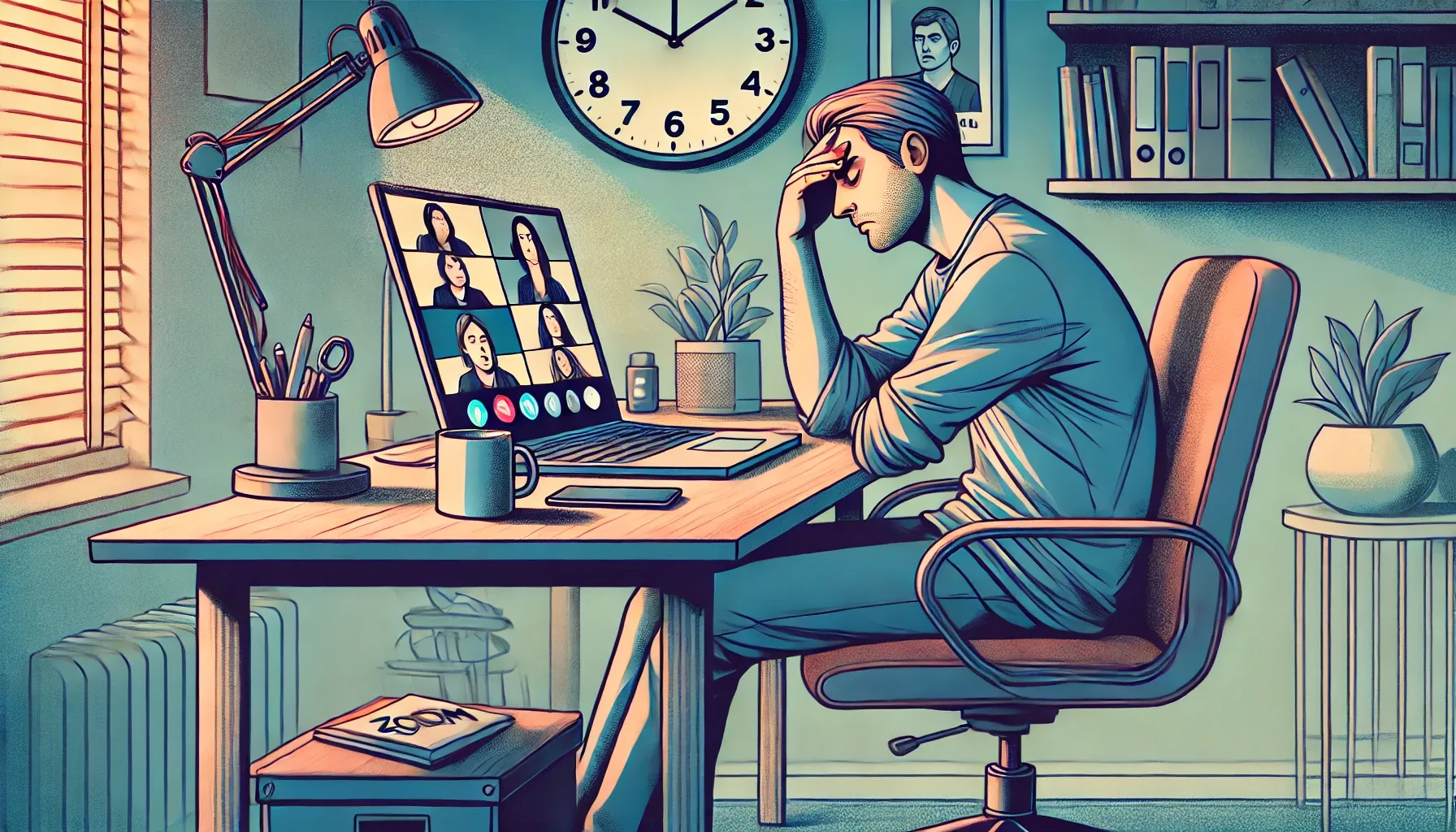
With rapid growth in remote work, many professionals face new health challenges. Many are troubled by accumulated fatigue specific to remote work: long hours at the computer, “Zoom fatigue” from more online meetings, and worsening posture due to unsuitable working environments, leading to headaches, shoulder stiffness and eye strain.
A Daiichi Sankyo Healthcare survey found that around two in three people, 66%, experienced some physical discomfort after starting remote work, with shoulder stiffness the most common at 41.6%. Furthermore, about 60% said shoulder or lower-back pain had worsened compared with before remote work.
This article examines the science behind remote-work fatigue, dry head spa as a way to relieve it, and the treatments offered at “HITOYASUMI Dry Head Spa & Body Care”, five minutes on foot from Nagoya Station. Even in a busy working life, these ideas can help you recover effectively and improve productivity and quality of life.
Scientific mechanisms of remote-work fatigue
Physiological effects of long computer use
Desk work, especially long hours at a computer, affects both brain and body in many ways. Prolonged concentration can fatigue the prefrontal cortex, reducing overall information-processing capacity and causing distracted attention or autonomic disturbances, such as problems regulating temperature or heart rate.
Around 77% of visual-display-terminal workers report some fatigue symptoms, most commonly eye pain or fatigue, around 90%, and neck or shoulder stiffness. Remaining still during desk work also slows circulation, reducing the brain’s oxygen supply and causing “brain fatigue.”
Scientific findings thus show that prolonged computer work places wide-ranging demands on cognitive function, muscles and blood circulation.
Blue-light exposure
Blue light emitted by computer and smartphone screens has a short wavelength and high energy, and concerns have been raised about retinal strain and effects on bodily rhythms. Exposure at night can suppress sleep-hormone secretion and leave the brain stimulated, making it harder to fall asleep.
Blue light is also particularly unpleasant for migraine sufferers, and studies report that it can readily trigger attacks. Researchers are beginning to explain how it worsens headaches through retinal intrinsically photosensitive ganglion cells, ipRGCs. There are also reports of reduced migraine attacks when blue light is filtered at night.
Effects may also differ according to light’s color components. Some research suggests that blue light tends to stimulate the sympathetic nervous system, while orange light tends to stimulate parasympathetic activity.
Psychological and physical strain from online meetings (Zoom fatigue)
Video meetings place a distinctive load on the brain compared with face-to-face meetings, producing what is known as “Zoom fatigue.” Screen-based conversation lacks subtle in-person cues, such as smell and information at the edge of the visual field, so the brain must work harder to understand the situation.
A Stanford University research team identifies four main causes of fatigue from prolonged online meetings:
- More gaze-related stress(the tension of continuously looking at others’ faces close up)
- Excessive awareness of your own image
- Restricted movement
- Greater cognitive demands during meetings
Reported psychological burdens include stress from excessive self-awareness when one’s own image is constantly visible and the tension of feeling “always watched.” Research by Dr. Allison Gabriel at the University of Arizona found that employees were more fatigued on days when their camera was on during video meetings than on days when it was off.
Mechanisms of text-neck/tech-neck syndrome
Keeping the head pushed forward for long periods to look at a smartphone or laptop can cause the syndrome known as “text neck,” “smartphone neck” or “tech neck.”
The human head weighs around 5 kg, roughly 10% of body weight. Yet tilting the neck by only 15 degrees increases the load to about 12 kg; at 30 degrees it is 18 kg, at 45 degrees 22 kg, and at 60 degrees about 27 kg. The more deeply you look down, the more the effective gravitational load multiplies on the neck’s bones and muscles, straining the cervical spine and surrounding tissues.
This can produce neck and shoulder stiffness or pain, headaches, dizziness and eye strain. As text neck progresses, it can lead to rounded posture, cervical changes such as straight neck, tingling in the arms from nerve compression, and even autonomic symptoms including nausea, insomnia and depressive tendencies.
Such symptoms from prolonged forward-leaning posture are increasingly common and have prompted warnings about an “occupational disease of the smartphone era.”
The reality of desk-work-related head, neck and shoulder problems
Increasing shoulder stiffness and headaches as remote work grows
According to a September 2020 Daiichi Sankyo Healthcare survey, after starting remote work, *around two in three people (66%) reported some physical discomfort*, with shoulder stiffness first at 41.6% and lower-back pain second at 28.3%. About 60% said shoulder or lower-back pain had become worse, and as many as 40% reported reduced work efficiency because of pain.
The most frequently reported effect of reduced exercise while working from home was also neck and shoulder stiffness, at 55.1%. Statistics therefore indicate worsening shoulder stiffness and headaches in remote-work environments.
Age and gender differences
Neck and shoulder stiffness is reported particularly often during prime working years. A nationwide survey of 100,000 people found that around 75.3% of those in their 30s and 40s experienced it, a higher proportion than in other age groups.
Another survey of remote-work discomfort found that 69.1% of working mothers in their 30s and 40s reported shoulder stiffness, a particularly high rate exceeding men of the same ages. Women generally report shoulder stiffness more often than men; some data put overall rates around 78% for women and 66% for men. Menstruation and hormonal balance have also been suggested as influences.
Women in their 20s to 40s also have high rates of tension headaches and migraines, sometimes worsened by remote work. Although reported symptoms differ by age and gender, working women in their thirties and forties can be especially vulnerable to remote-work fatigue.
Differences by occupation
People doing office desk work or IT work generally report neck and shoulder problems more often. The Ministry of Health, Labour and Welfare’s VDT guidelines also describe increased musculoskeletal risks in work involving prolonged sitting and screen viewing.
A large survey found a marked increase in shoulder-stiffness complaints among desk workers sitting for seven hours or more. Physically active workers had comparatively less neck and shoulder stiffness, but other burdens, such as lower-back pain, predominated. Thus, IT and administrative roles with long computer hours are reported to have higher rates of headaches and neck or shoulder stiffness than people in other occupations.
The scientifically studied effects of dry head spa
Circulation-promoting effects of scalp massage
Dry head spa is a relaxing head massage that uses neither water nor oil. Scientific findings show that working the scalp dilates capillaries and encourages circulation in the head.
A Kao study reported that repeating about one to three minutes of scalp massage every day significantly increased resting scalp blood flow after six months. Although the immediate effect of a single massage is temporary, continued scalp massage leads to lasting improvements in blood flow over time.
Improved blood flow also helps remove metabolic waste from muscles and contributes to a refreshed feeling throughout the body, not only the head. Physiologically, there is therefore scientific support for head spa massage promoting circulation and releasing tight muscles.
Autonomic mechanisms
Head spa can help balance the autonomic nervous system. Experimental measurements of heart-rate variability before and after head massage have confirmed increased parasympathetic, or relaxation-related, activity and normalization of autonomic balance that had been under stress.
One study reported that around 70% of scalp-massage participants experienced a change in autonomic activity described as feeling “less heavy and sluggish, and more refreshed.” The scalp contains many nerves and pressure points; suitable stimulation is thought to reach the brain and favor parasympathetic activity.
In a quiet setting, head spa can relax both mind and body so deeply that some people fall asleep. This relaxation response also helps lower stress hormones and stabilize mood, providing scientific support for head spa as one aid to autonomic balance.
How fascia release eases headaches and shoulder stiffness
Dry head spa involves more than stroking the skin: it also uses fascia-release-style techniques for the head, neck and shoulders. Fascia is the thin membrane around muscles. When it stiffens or adheres because of prolonged posture or stress, movement decreases and pressure on nearby nerves and blood vessels can cause pain.
Fascial adhesions are often involved in chronic neck and shoulder pain. Tight fascia around the shoulder blades restricts movement and produces stiffness and fatigue. Carefully releasing fascia from the head to the neck through head spa relaxes muscles and improves circulation, potentially easing underlying shoulder stiffness and tension headaches.
Immediately after fascia release, neck and shoulder range of motion often increases. Many people feel their head is lighter as pressure at the back of the neck is released. Relieving nerve compression and poor circulation through fascia release is thus one reason head spa can help headaches and shoulder stiffness.
Brain-fatigue recovery
Information overload and stress often exhaust the modern brain, and head massage also offers “rest for the head.” One theory is that massaging the head encourages secretion of serotonin, the so-called happiness chemical, and brings about relaxation.
Having someone massage your head is also related to the “grooming effect” observed in animals and is known to create reassurance and relaxation. When parasympathetic activity dominates during head spa, alpha brain waves increase and the brain becomes calmer, helping it recover from fatigue.
Blood vessels and nerves in the brain that were tense from stress can also relax. Many people report a clearer head and renewed concentration after head spa. These scientific findings suggest that dry head spa helps the brain cool down and recover from fatigue.
HITOYASUMI’s approach
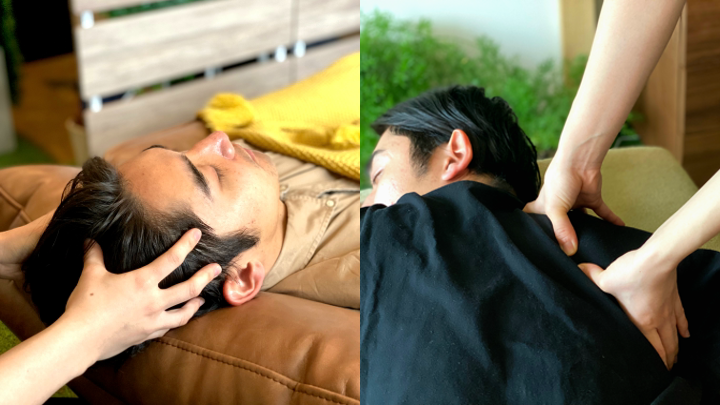
“HITOYASUMI Dry Head Spa & Body Care”, five minutes on foot from Nagoya Station, offers an approach specifically tailored to fatigue from remote work and desk work.
Special treatments for desk workers
HITOYASUMI understands the distinctive fatigue experienced by desk workers and remote workers and offers specialized treatments designed to address it.
- Drift off to sleep♪ [For desk-work fatigue] Relaxing Dry Head Spa, 75 minutes: A sleep-inducing dry head spa including neck, shoulders and décolleté, effective for a heavy head, tired eyes, shoulder stiffness and sleep quality: 60 minutes of treatment plus 15 minutes of consultation.
- Highly satisfying [For shoulder stiffness and lower-back pain!] Dry Head Spa × Back-Focused Release, 105 minutes: A special treatment combining dry head spa with popular shoulder-blade care and lower-back massage: 90 minutes of treatment plus 15 minutes of consultation.
- [Customize treatment to your concerns☆] Dry Head Spa & Fatigue Care, 115 minutes: Add several personalized areas of care to a sleep-inducing dry head spa. Focus on your concerns around the shoulder blades, lower back, legs, eyes or elsewhere: 100 minutes of treatment plus 15 minutes of consultation.
Experienced therapists and a relaxing setting
HITOYASUMI’s greatest feature is careful treatment by experienced therapists. Drawing on years of experience and specialist knowledge, they tailor each treatment to the individual customer’s condition.
The quiet, calm treatment setting helps you forget the bustle of the city. Twelve varieties of foliage plants offer a forest-bathing effect, while music with 1/f fluctuations supports mental calm and enhances the treatment. Carefully chosen lighting and fragrances also encourage comfortable relaxation.
Consultation and individual care
HITOYASUMI holds a detailed consultation before treatment, carefully listening to each customer’s concerns and symptoms. Taking the remote-work environment, working posture and lifestyle into account, the therapist recommends the most suitable individual plan.
For example, treatment focuses on releasing head tension when headaches are the main concern, or gives greater attention to fascia around the shoulder blades when shoulder stiffness is severe.
Self-care methods you can practice at home
Here are self-care methods that can enhance the effects when combined with professional dry head spa.
Effective stretches during desk work
Adding simple stretches between periods of office work can help prevent stiffness in the neck and shoulders.
Neck stretches:
- Side-of-neck stretch: hold the opposite wrist with one hand and draw it downward, then slowly tilt your neck in the opposite direction to stretch the upper trapezius.
- Back-of-neck stretch: interlace both hands behind your head, let their weight gently draw your chin in, and stretch the muscles at the back of the neck for about 30 seconds.
Shoulder stretches:
- Shoulder lifts: repeatedly shrug the shoulders and then relax them downward to loosen the surrounding muscles.
- Shoulder-blade circles: shrug the shoulders and circle them backward, or clasp your arms behind your back and open the chest to move the area around the shoulder blades.
These stretches ease muscle tension and improve flexibility. Ideally, repeat them regularly, about once an hour.
Taking breaks well
How you take breaks matters for maintaining productivity and preventing fatigue. Ministry of Health, Labour and Welfare guidelines recommend breaks of about ten minutes every hour of VDT work.
Research using time-tracking tools has also found the highest productivity in a cycle of 52 minutes of work followed by 17 minutes of rest.
Studies suggest that light stretching or physical activity during a break activates the brain and improves subsequent work efficiency more than simply doing nothing. Reports show that even five to ten minutes of light exercise produces moderate changes in heart rate and blood pressure and reduces subjective fatigue and stress.
Resting the eyes with methods such as the “20-20-20 rule”—looking 20 feet away for 20 seconds every 20 minutes—can also help prevent eye strain.
Posture improvements
Reviewing everyday posture can greatly reduce neck and shoulder strain. For computer work, aim to set the monitor around eye level and sit with your back straight.
When the head is directly above the body, cervical load is about 5 kg; when it moves forward, that can become 20–30 kg depending on the angle. It is therefore important to maintain a chin-tucked posture with the ears aligned with the shoulders throughout your work.
Ergonomically, supporting the arms and lower back with armrests and cushions is considered helpful. Reports describe reduced neck and lower-back pain after introducing posture-supporting chairs or standing desks.
When looking at a smartphone, ideally open the chest, gently tuck the chin and raise the device as close to eye level as possible.
Self-massage for remote workers
Self-massage during work at home can also help reduce fatigue.
Head self-massage:
- Press and release with the fingers of both hands from the base of the neck toward the back of the head to ease muscle tension and shoulder stiffness.
- Circular massage at the temples and back of the head may ease eye fatigue and tension headaches.
Shoulder self-massage:
- Place a tennis ball between your back and a wall and roll it around the shoulder-blade area to loosen fascia and ease stiff shoulders.
- Gently knead the shoulders with your palms to encourage blood circulation.
Even if you cannot match professional treatment, five to ten minutes of massage while warm after bathing can promote circulation and relaxation. Self-care devices such as massage guns and head massagers are now available, but simply starting with gentle palm-and-finger massage on the neck, shoulders and head can be effective enough.
Habits that can complement dry head spa’s effects
The relationship between improved sleep quality and head spa
Quality sleep is fundamental to recovery and can complement head spa. By creating a relaxed state with increased parasympathetic activity, dry head spa is thought to help people fall asleep and enter deeper, non-REM sleep.
Head massage eases stress and nervous arousal, which can contribute to insomnia, and many customers report sleeping soundly on the night after treatment. A habit of light self-administered scalp massage before bed can also reset the day’s tension and improve sleep quality.
Once adequate sleep clears the day’s brain fatigue, a positive cycle may develop in which less remote-work fatigue carries into the next day. Combining head spa with good sleep can enhance the recovery capacity of mind and body.
The relationship between hydration and headache relief
Regular hydration is also important for enhancing head spa’s effects. Medical observations indicate that dehydration increases blood viscosity and makes headaches more likely through “mild dehydration of the brain.”
Research in people with chronic headaches reports that increasing fluid intake may improve headache frequency and intensity. Even if head spa improves circulation in the head, insufficient hydration can limit the benefit.
With adequate hydration, massage-related waste removal can also proceed more smoothly. Because relying only on coffee or tea may increase dehydration through their diuretic effects, aim consciously for about 1.5–2 L of water or barley tea a day. Combining appropriate hydration with head spa may offer complementary relief from headaches and fatigue.
Ideal posture and environment for smartphone and computer use
Even after head spa releases the neck and shoulders, poor everyday posture can quickly bring tension back. It is therefore important to build good device posture into your routine.
When using a smartphone:
- Ideally, avoid looking too far down: open the chest, tuck the chin gently and lift the phone to eye level.
- When sitting, place a cushion or bag on your thighs and support your elbows on it while holding the phone to reduce neck strain.
When working at a computer:
- Adjust chair and desk height so that the top of the screen is at eye level when setting up your workstation.
- Use armrests or wrist rests so the arms do not hang unsupported while typing or using the mouse. Sit well back and lean against the backrest to maintain the spine’s S-shaped curve.
- Choose an eye-friendly environment, for example warm lighting that is not excessively bright.
Making this posture and working environment habitual can help the relaxed condition of your neck and shoulders last longer after head spa.
Combining stress reduction and relaxation techniques
To address remote-work fatigue at its roots, it can help to combine physical care such as head spa with measures for psychological stress. For example, deep breathing or meditation practiced daily to ease mental tension, combined with regular head spa sessions to release physical tension, can reinforce the relaxing effects of both.
A study combining five to ten minutes of hand massage with pleasant music found lower heart rate and blood pressure and clear improvements in stress indicators. Aromatherapy and healing music during head spa can also further stimulate parasympathetic activity and multiply the calming effect.
In daily life, also consider pairing head spa with stress relief such as time for hobbies, light exercise or relaxing baths. An approach addressing both mind and body can produce complementary effects that help resolve stubborn fatigue and stiffness.
Conclusion: maintaining health in the remote-work era
Fatigue from remote work and desk work can develop into chronic health problems if left unattended. Brain fatigue and neck or shoulder stiffness caused by prolonged computer work, blue-light exposure, more online meetings and poor posture are major challenges for today’s desk workers.
Specialist dry head spa care can be very effective for these problems. By promoting circulation, adjusting autonomic balance and releasing fascia, it can address remote-work fatigue scientifically and at its roots.
Regular care is essential not only for work efficiency but also for protecting mental and physical health. If you are experiencing remote-work fatigue, try a professional dry head spa treatment.