2026
Mar
11
Tired after a life change? Five ways to rest your brain and prevent the May blues

A new workplace, new relationships, a new commute.
April is a season of change. You are trying to settle in, yet feel sluggish, heavy-headed, sleepless, or rigid in the shoulders and neck.
Have you noticed these discomforts?
These may be signs that stress from a change in your surroundings is putting a strain on your brain.
This guide clearly explains why changes in your surroundings create stress, self-care you can start today, and how dry head spa gives the brain a physical opportunity to rest.
If you are trying hard but still do not feel yourself, read on.
Three ways environmental change creates stress
“The new environment should be exciting. Why am I so tired?”
This is a very natural response. Even positive change puts a real load on the mind and body.
Adaptation costs: processing new information at full capacity
The brain processes everyday routines on “autopilot.” Your usual commute, conversations with familiar colleagues and systems you know well are tasks that use almost no mental energy.
When the environment changes, that automatic mode suddenly becomes unavailable.
- Learning new colleagues’ names and faces
- Understanding an unfamiliar office layout
- Learning unfamiliar workflows
- Checking transfers on a new commute
Each small task requires active processing from the brain.
In psychology this is called adaptation cost. Adapting can use several times the mental energy of an ordinary routine.
Autonomic overdrive: excessive sympathetic tension
In a new environment, the body unconsciously enters fight mode, continually watching for what may happen.
This fight mode is controlled by the sympathetic nervous system.
Normally the sympathetic nervous system dominates during the day, then switches to the parasympathetic system at night to enter relaxation mode. Continuing stress from environmental change can prevent that switch from working properly.
Does the switch stay on at night, with tomorrow’s tasks circling even in bed?
That is an autonomic system pushed too far.
Hidden fatigue from trying hard: emotional labour
An overlooked source of stress during change is emotional labour and the fatigue it creates.
At a new workplace, you may deliberately smile, read the atmosphere and hide your real feelings to appear agreeable.
The effort of being mindful of others consumes a great deal of mental energy. Managing relationships with constant care is said to tire the brain far more than desk work.
If the work is not especially difficult yet you arrive home exhausted, emotional labour may be contributing.
Signs to notice: a self-check for change-related stress
Do any of the following apply?
- Still tired when waking
- A heavier head and more foggy moments
- Rigid neck and shoulders
- Difficulty falling asleep or waking at night
- Irritated by small things
- Not feeling rested even on days off
- Low appetite or overeating
Three or more may mean adaptation costs are overworking your mind.
Pushing on because you feel it is still manageable can allow headaches, insomnia or digestive discomfort to appear. Early care matters.
Five self-care ideas for stress during change
Unsure what resting the mind means in practice? Here are five things to try today.
1. Deliberately create 15 minutes of doing nothing
One of the most effective ways to rest the mind is deliberately making time to do nothing.
Phones, television and music may feel relaxing, but the brain continues processing information.
Try 15 blank minutes looking outside or closing the eyes and breathing deeply. Information processing pauses and recovery can begin.
At lunch or after arriving home, put down the phone and try 15 minutes of nothing.
2. Replace the bedtime phone with a warm towel
During change, bedtime often becomes more information gathering: tomorrow’s preparations or messages to reply to. The mind has no chance to switch off.
Put the phone away 30 minutes before bed and instead place a warm towel over the eyes and behind the neck.
The warmth improves circulation and helps the body switch to parasympathetic activity. Simply microwave a damp towel for one minute; it takes very little effort.
3. Ear massage during the commute for a restful reset
The ears have many pressure points associated with the autonomic nervous system. This simple self-care practice can even be done on a commuter train.
How:
1. Gently hold the top of each ear and draw upwards for five seconds
2. Hold the sides and draw outwards for five seconds
3. Hold the lobes and draw downwards for five seconds
4. Cover each ear with a palm and circle slowly, five forwards and five backwards
Try twice daily, morning and evening, to support balance.
4. A weekend day to organise your mind
Like a computer’s defragmentation, the mind needs time to sort information.
At some point over the weekend, set aside half a day without plans. Walk, sit in a café or take a slow bath. Nothing special is required.
During change, you may feel holidays must be useful, but unplanned time can be the mind’s best maintenance.
5. Professional help to switch off: dry head spa
If you feel fatigue that self-care alone cannot address, professional treatment is worth considering too.
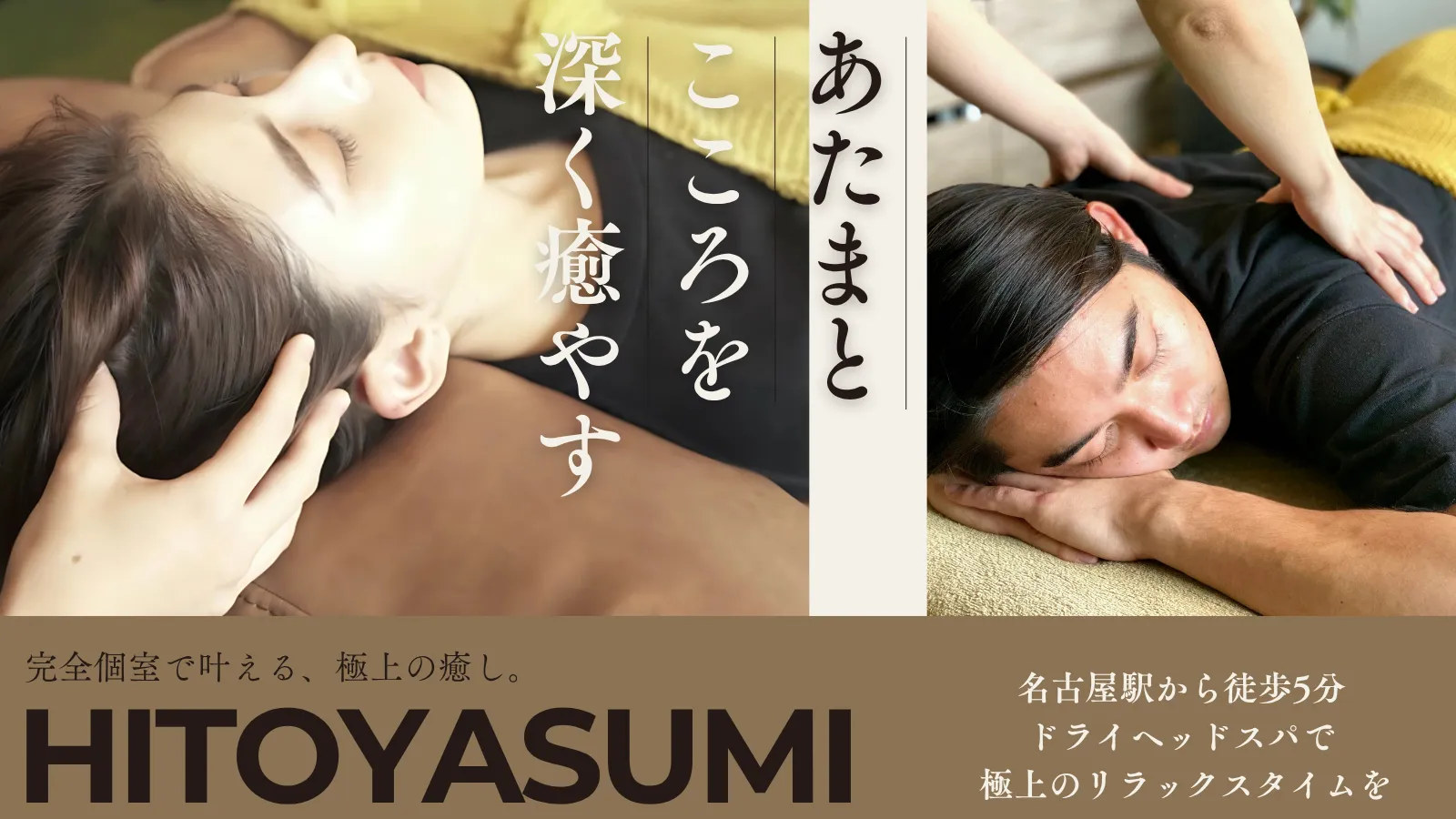
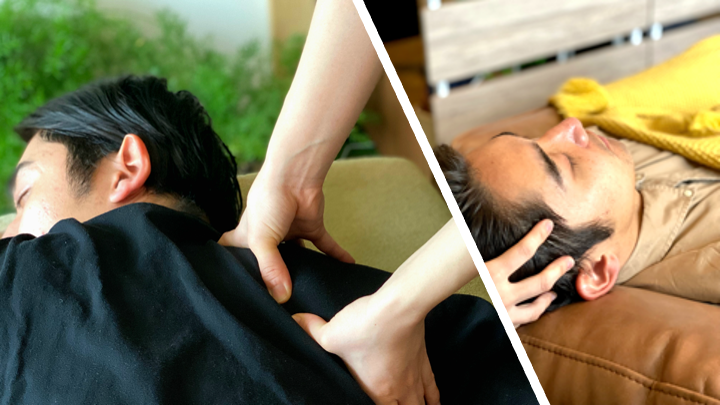
Dry head spa is a treatment that works directly on the head, neck and shoulder muscles to switch the busy mind off. With no water or oil, you can enjoy it in your suit after work.
Stress from change tends to tighten the temporalis muscles around the temples and the suboccipital muscles at the base of the neck. Relaxing them improves blood flow to the brain and helps the autonomic nervous system switch more smoothly into rest mode.
Many people drift off during treatment, showing a genuine pause for the mind. You can experience deep rest beyond everyday self-care.
Frequently asked questions
Q. When does stress from change usually settle?
A. Adapting to a new environment is generally said to take one to three months. This varies with the scale of change and personality. If it is still difficult after three months, stress may have become persistent; early care is worthwhile.
Q. Can positive changes such as promotion or marriage also cause stress?
A. Yes. For the brain, change means new information to process, so happy changes also cost energy. Feeling tired despite happiness is entirely natural.
Q. How often should I have dry head spa?
A. During environmental change, we suggest every two weeks. As you settle in, monthly maintenance is fine. Regular mental rest helps keep stress from building.
Q. Can men use it?
A. Of course. Many HITOYASUMI guests are men. Private rooms let everyone relax without worrying about others.
Q. Is it okay to fall asleep during treatment?
A. Falling asleep can be ideal. Drifting off suggests the mind has entered rest mode. There is no need to force yourself awake; leave the care to us.
About HITOYASUMI
The private-room salon a five-minute walk from Nagoya Station, HITOYASUMI, offers personalised care suited to each guest’s condition.
For fatigue from environmental change, we recommend dry head spa (75 min, ¥5,980). Thorough neck, shoulder and décolletage care supports rest for mind and body.
For those wanting whole-body care too, we also offer dry head spa & back myofascial release (105 min, ¥8,980).
Salon information
Address: THE WHITE OISE 201/301, 5-12 Takebashicho, Nakamura-ku, Nagoya, Aichi
Hours: weekdays 12:00–21:00 / weekends and public holidays 11:00–20:00
Phone: 052-898-2851
Reservations: online or by phone
Conclusion
Change-related stress cannot always be solved by determination or simply getting used to things. The adapting mind can become overworked without noticing.
Build a practical way to rest the mind into everyday life.
Start today by creating 15 minutes of doing nothing.
If self-care cannot keep up, try switching off with HITOYASUMI dry head spa.
A lighter tomorrow begins with a little rest. We look forward to welcoming you.