2026
Mar
18
Fatigue at the start of a new fiscal year: April self-care and dry head spa for an overworked brain

“I have felt sluggish ever since the new fiscal year began.”
“I sleep properly every night but wake tired.”
“My head feels foggy and I cannot concentrate at work.”
Have you noticed these changes since April began?
This may be more than ordinary tiredness: mental fatigue specific to the start of a new fiscal year.
New surroundings, relationships and routines make April a succession of changes. Even when the body feels fine, the brain may keep working at full capacity.
This article explains why fatigue lingers at the start of a new fiscal year, self-care you can start today, and how dry head spa can help relieve accumulated mental fatigue.
Three causes of lingering fatigue at the start of a new fiscal year
If you wonder, “Was April always this tiring?”, be reassured: there are clear reasons why the start of a new fiscal year feels demanding.
Cause 1: the brain cannot use its energy-saving mode
In everyday life, the brain handles many things on autopilot. Familiar commutes, conversations with colleagues and everyday tools require relatively little energy.
At the start of a new fiscal year, that autopilot is suddenly reset.
- Learning team members’ names and roles
- Adapting to changed workflows
- Learning new systems or tools
- Working out how to relate to new people
Each may look minor, but to the brain, all require active, full-attention processing. Daily accumulation can drain mental energy.
Cause 2: spring fatigue from temperature swings
April can be warm by day yet cold morning and night. These temperature differences strain the autonomic system.
The system regulates temperature, but differences of 7°C or more in a day are said to make adjustment difficult.
The following can become more common.
- Difficulty waking and sluggishness
- Daytime sleepiness
- Low appetite or overeating
- A heavy head and stiff shoulders
This is often called spring fatigue. April combines environmental and temperature changes, making it a demanding time for the body.
Cause 3: social effort consumes mental energy
The start of a new fiscal year is also a time to rebuild relationships.
How to report to a new manager, interact with junior colleagues or conduct yourself in a new department. Constantly considering how to behave consumes considerable mental energy.
Psychology calls this emotional labour. Smiling, reading the atmosphere and suppressing honest feelings can tire the mind more than desk tasks.
If work itself is not busy yet you arrive home drained, emotional labour may be contributing.

Check your fatigue at the start of the fiscal year
How many of these apply?
- You used to wake before the alarm but struggle recently
- A foggy head and difficulty organising thoughts
- Rigid neck and shoulders
- Trouble falling asleep or waking at night
- Tired on Monday despite weekend catch-up sleep
- Irritated by small things
- No energy for things you enjoy
Three or more may indicate accumulated mental fatigue.
Without early care, it may contribute to May blues after Golden Week.
Five self-care habits to reset a tired mind
Want to rest your brain but unsure how? Here are five habits you can start today.
1. Five quiet minutes in the morning
Do you look at your phone as soon as you wake?
The waking brain is still half asleep. Flooding it with news or social media forces it straight into full activity.
Instead, first open the window and look outside quietly for five minutes. Natural light resets the body clock and wakes the mind gently.
2. Just one new thing per day
Too much to learn can leave the brain with a processing queue.
Choose just one new thing to learn each day: today, learn this system; today, learn this person’s name.
Letting go of perfection and choosing one thing reduces the load. You do not have to learn everything at once.
3. Rest your ears on the commute
Do you listen to music or podcasts with earphones during your commute?
In fact, auditory information also consumes mental energy. At the start of the fiscal year, daytime information processing alone may already fill the brain’s capacity.
Two or three commuting days a week, try time without listening to anything. Simply let yourself notice the movement of the train and the sounds around you, allowing your brain to enter recovery mode.
4. A three-line evening diary to organise the mind
Unorganised thoughts can keep circling at night: tasks to do and things to remember.
Before bed, make a habit of writing just three lines in a notebook.
- One thing that went well today
- One thing to do tomorrow
- Your current mood in a word
Writing clears pending thoughts and markedly improves sleep quality. Phone notes are fine, but handwriting is said to be especially useful for organising thought.
5. A weekend day to recharge the mind
At the start of a new fiscal year, it is tempting to fill weekends because you feel you must enjoy your days off. Instead, we recommend keeping one April weekend day free to do nothing.
Walk, sit in a café or nap. Not adding new information to process can be the best recharge.
There is no need to feel guilty for doing nothing. That can be when the mind recovers most.
When self-care cannot keep up: consider dry head spa
We have covered several self-care ideas, but fatigue at the start of a new fiscal year often reaches a level that self-care alone cannot keep up with.
If sleep does not restore you or the head remains heavy and foggy, fatigue may exceed what your current self-care can address.
One option to turn to is Dry head spa.
Three approaches to mental fatigue
1. Directly relaxing head muscles
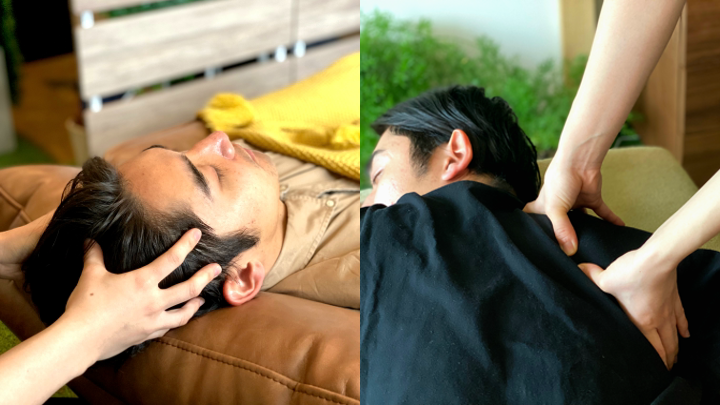
Using only our hands, we carefully relax the temporalis muscles around the temples and the suboccipital muscles at the base of the neck, which can tighten under the stress of a new fiscal year. As the muscles relax, circulation improves and oxygen supply to the brain recovers. This is why the head can feel clearer afterwards.
2. Restoring autonomic balance
The start of a new fiscal year can disrupt autonomic balance. The pleasant stimulation of dry head spa helps restore it by encouraging parasympathetic activity and a shift from “fight mode” to “recovery mode”. Naturally falling asleep during treatment reflects this relaxation.
3. Reduce incoming information to the brain to zero
Close the eyes in a dark, quiet space and shut out information. With nothing new to process, the clearing of accumulated fatigue-related substances is encouraged. This is genuine mental rest, unlike a break spent looking at a phone.
What to do in April against May blues
Each year after Golden Week, many people do not want to return to work and lack motivation, often called May blues.
Many cases of May blues reflect April’s accumulated mental fatigue exceeding its limit. Golden Week can feel restorative while underlying fatigue remains.
The key in April is building a deliberate way to rest the mind into daily life.
- Make one self-care habit regular, such as five quiet morning minutes or a three-line diary
- Arrange professional mental rest once or twice monthly
- Give yourself permission not to overwork
You do not have to handle the new year perfectly. Making good use of little rests is a practical way through April.
Frequently asked questions
Q. When does fatigue at the start of a new fiscal year usually settle?
A. Adapting to a new environment is generally said to take one to three months. However, continuing deliberate care can shorten the adjustment period. Conversely, pushing yourself too hard often leads to becoming unwell in May or June.
Q. Can dry head spa help with fatigue at the start of a new fiscal year?
A. Yes, especially a heavy or foggy head and fatigue that sleep does not clear. Because mental rather than muscle fatigue often dominates, direct head care is a fitting option.
Q. How often do you recommend?
A. During April and May, we suggest once every two weeks. As you settle into the environment, monthly maintenance is fine. Regular rest can help prevent fatigue accumulating.
Q. Can I come straight after work?
A. Of course. No water or oil is used, so suits or casual clothes are fine. Five minutes from Nagoya Station, we welcome after-work visits and open until 21:00 on weekdays.
Q. Can men visit?
A. Of course. HITOYASUMI is a private salon welcoming all genders. Many men visit for fatigue at the start of a new fiscal year too. Completely private rooms let you relax without worrying about others.
About HITOYASUMI
“I seem to feel tired all the time lately.” If that sounds like you at the start of this fiscal year, why not try care starting at the head.
Visit the private-room salon just a five-minute walk from Nagoya Station, HITOYASUMI, to refresh both mind and body.
Recommended treatments
Dry head spa (75 min), ¥5,980
Thorough neck, shoulder and décolletage care: our first recommendation for easing mental fatigue at the start of a new fiscal year.
Head spa & customised care (95 min), ¥8,280
Personalised treatment focused on your particular concerns.
Dry head spa & back myofascial release (105 min), ¥8,980
Head-to-back care when desk-work tiredness extends through the body.
Salon information
Address: THE WHITE OISE 201/301, 5-12 Takebashicho, Nakamura-ku, Nagoya, Aichi
Access: 5-minute walk from Nagoya Station
Opening hours: weekdays 12:00–21:00 / weekends and public holidays 11:00–20:00
Closed: year-end and New Year holidays
Phone:052-898-2851
Reservations: online or by phone
Conclusion
Lingering fatigue at the start of a new fiscal year does not mean you are weak. It means the brain is working at full capacity to adapt.
Start just one habit today, whether five quiet morning minutes or a three-line evening diary. One is enough.
If self-care cannot keep up, try a mental reset with HITOYASUMI dry head spa.
A lighter tomorrow begins with a little rest. We look forward to welcoming you.