2026
Apr
01
Caring for your autonomic nervous system: five self-care habits and dry head spa

“I am not especially busy, but I just do not feel well.”
“I suddenly get palpitations or dizziness.”
“I feel irritable or anxious without a reason.”
Do you recognise this vague feeling of being unwell?
You may not feel ill enough to see a doctor, yet you never quite feel refreshed. The cause could be autonomic imbalance.
Spring combines temperature swings and environmental changes, making balance especially vulnerable. This article explains how disruption happens, self-care and professional help for a reset.
What is the autonomic nervous system?
It is the part of the nervous system that regulates bodily functions around the clock without conscious control.
Heartbeat, breathing, digestion, temperature and blood pressure are all regulated by it.
It has two branches.
- Sympathetic nerves: activity mode—increasing heart rate and blood pressure and tensing muscles
- Parasympathetic nerves: recovery mode—slowing heart rate, promoting digestion and relaxing muscles
The two normally balance like a seesaw, with sympathetic activity higher during the day and parasympathetic activity at night.
Stress or disrupted habits can upset this balance, prompting various signs of discomfort.
Four causes of autonomic imbalance
1. Spring temperature swings keep the autonomic nervous system working at full capacity
A daily temperature difference of 10°C or more is not unusual in spring.
The autonomic system continually adjusts to maintain body temperature, but differences above 7°C approach the limits of its adjustment. Repeatedly moving from winter-like mornings to warm afternoons wears it down.
2. Long phone and computer use keeps activity mode on
Blue light, constant notifications and social media information keep the brain in alert, sympathetic-dominant mode.
Phone use until just before bed interferes with the switch to relaxation, leaving the body unrested even while asleep.
3. Irregular daily rhythm confuses the body clock
The autonomic system works with the body clock. When waking, eating and sleeping times vary, it loses clear cues for entering activity mode.
Sleeping in on holidays creates a gap from weekday routines and can contribute to discomfort at the start of the week.
4. Accumulated stress keeps the sympathetic side overactive
Work pressure, the strain of relationships and worries about the future can keep the sympathetic nervous system persistently dominant.
If it continues, the body cannot leave fight mode at night, and insomnia, headache, stiff shoulders and digestive discomfort can follow.

A self-check for autonomic imbalance
How many of these apply?
- Tired from the moment you wake
- Constant neck or shoulder tension
- Cold or flushed hands and feet
- Indigestion or an inconsistent appetite
- Trouble falling asleep or waking during the night
- Sudden anxiety or palpitations
- Feeling unwell before weather deteriorates
- Not feeling relaxed even after a bath
Three or more may suggest disrupted autonomic balance.
Five self-care ideas for autonomic balance
1. Gently wake your digestive system with a cup of warm water
Cold water immediately after waking can surprise the digestive system and stimulate a sudden sympathetic response.
Instead, sip warm water slowly to wake the organs gently and move smoothly from rest to activity. Around 50–60°C, feeling slightly hot, is the suggested guide.
2. The 4-7-8 breathing method for relaxation
You cannot directly command the autonomic system by willpower, but breathing is the only part you can consciously control.
How to do it:
- Breathe in through the nose for four seconds
- Hold for seven seconds
- Breathe slowly out through the mouth for eight seconds
Simply repeat three to four times to encourage parasympathetic activity and a calmer heartbeat. It can be done before a stressful meeting, before bed, anywhere.
3. A warm 15-minute evening bath
Hot baths stimulate sympathetic activity. For balance, choose 15 minutes in 38–40°C water.
Gentle warming supports relaxation, and the subsequent temperature drop brings natural sleepiness. One to two hours before bed is the ideal time.
4. Caring for the gut supports autonomic balance
The gut is called the second brain and is closely linked with the autonomic system. A disrupted gut environment can affect that balance.
Include fermented foods such as miso, natto and yoghurt, and fibre from vegetables, mushrooms and seaweed. A better gut environment also supports autonomic stability.
5. Weekly rhythmic exercise for serotonin
Walking, jogging, cycling and other steady rhythmic exercise encourage secretion of serotonin, the happiness hormone.
Serotonin helps regulate autonomic balance and is converted into melatonin, the sleep hormone, at night, so it is also directly linked with better sleep.
Twenty to 30 minutes once or twice weekly is enough; slight sweating is a suitable intensity.
Professional relaxation: what dry head spa offers
Some people still feel vaguely unwell despite continued self-care.
When autonomic strain has accumulated, self-care alone can take time to bring you back from feeling run-down to your usual baseline.
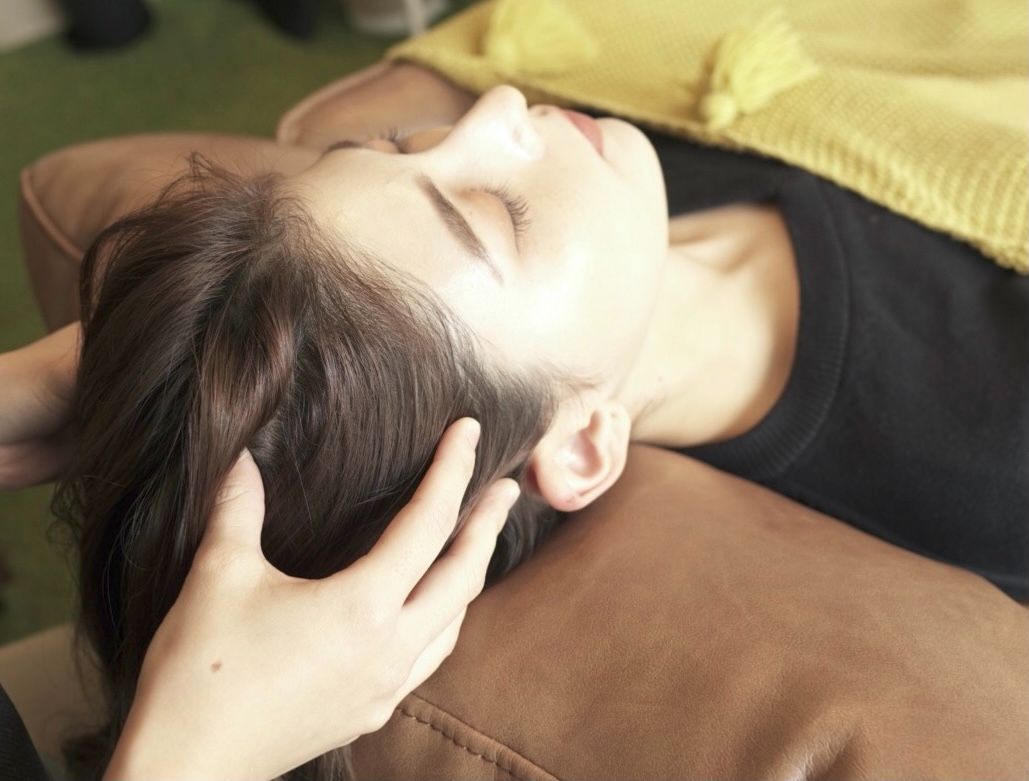
At such times, dry head spa offers a useful approach to a restful reset.
Why dry head spa may help autonomic balance
1. Touch encourages parasympathetic activity
Pleasant pressure from human hands and a steady rhythm act through sensory receptors in the skin to strongly encourage parasympathetic activity. The warmth of human hands, unavailable from a massage machine or self-care, promotes secretion of oxytocin, the reassurance hormone, and calms the brain’s stress response.
2. Head circulation supports the autonomic control centre
The autonomic control centre is in the brain’s hypothalamus. Relaxing the head muscles and improving circulation delivers oxygen and nutrients directly to the autonomic nervous system’s command centre. A healthier control centre supports regulation throughout the body.
3. Time without thinking supports mental maintenance
Eyes closed in a dark, quiet room, leaving care to professional hands: for the mind, this is a “defrag”: time to sort and organise information. Deep relaxation unavailable in ordinary life helps reset autonomic balance.
Visit HITOYASUMI for a restful autonomic reset
Frequently asked questions
Q. Should I see a doctor for autonomic imbalance?
A. Seek medical care first for severe symptoms, such as unrelenting palpitations or dizziness that prevents standing. For vague mild discomfort, lifestyle improvement and relaxation such as dry head spa can often help.
Q. Can one treatment restore balance?
A. Many guests notice deeper sleep that same night after one session. However, for fundamental improvement of chronic autonomic imbalance, we recommend continuing once every two to three weeks for one to two months.
Q. Which seasons are most likely to affect balance?
A. Spring (March–May) and autumn (September–November) are especially likely to disrupt balance. During seasonal transitions, large temperature swings put a strain on the autonomic nervous system as it regulates body temperature. Care once or twice a month during these periods can help prevent discomfort.
Q. Do men experience autonomic imbalance too?
A. Of course. It is not determined by gender. We also welcome many men in stressful desk or sales roles.
About HITOYASUMI
Continuing vague discomfort may be the body’s way of saying it is time to rest.
Visit the private-room salon a five-minute walk from Nagoya Station, HITOYASUMI, to help restore balance to your autonomic nervous system.
Recommended treatments
Dry head spa (75 min), ¥5,980
Thorough neck, shoulder and décolletage care: a first choice for a restful reset.
Head spa & customised care (95 min), ¥8,280
Personalised treatment for your concerns, including insomnia or persistent fatigue.
Dry head spa & full-body lymphatic care and myofascial release (135 min), ¥11,980
Thorough head-to-toe care for whole-body discomfort associated with autonomic strain. Women only.
Salon information
Address: THE WHITE OISE 201/301, 5-12 Takebashicho, Nakamura-ku, Nagoya, Aichi
Access: 5-minute walk from Nagoya Station
Opening hours: weekdays 12:00–21:00 / weekends and public holidays 11:00–20:00
Closed: year-end and New Year holidays
Phone:052-898-2851
Reservations: Book online here• Phone bookings
Conclusion
Left unattended, autonomic strain can trigger insomnia, headache, digestive discomfort and emotional instability.
Start one self-care habit today: morning warm water, evening breathing or a warm bath are all easy options.
If accumulated autonomic strain is more than self-care alone can address, try letting professional hands help you reset.
A lighter tomorrow begins with a little rest. We look forward to welcoming you.