2025
Nov
05
Relieve hidden year-end fatigue: three habits and the effects of dry head spa

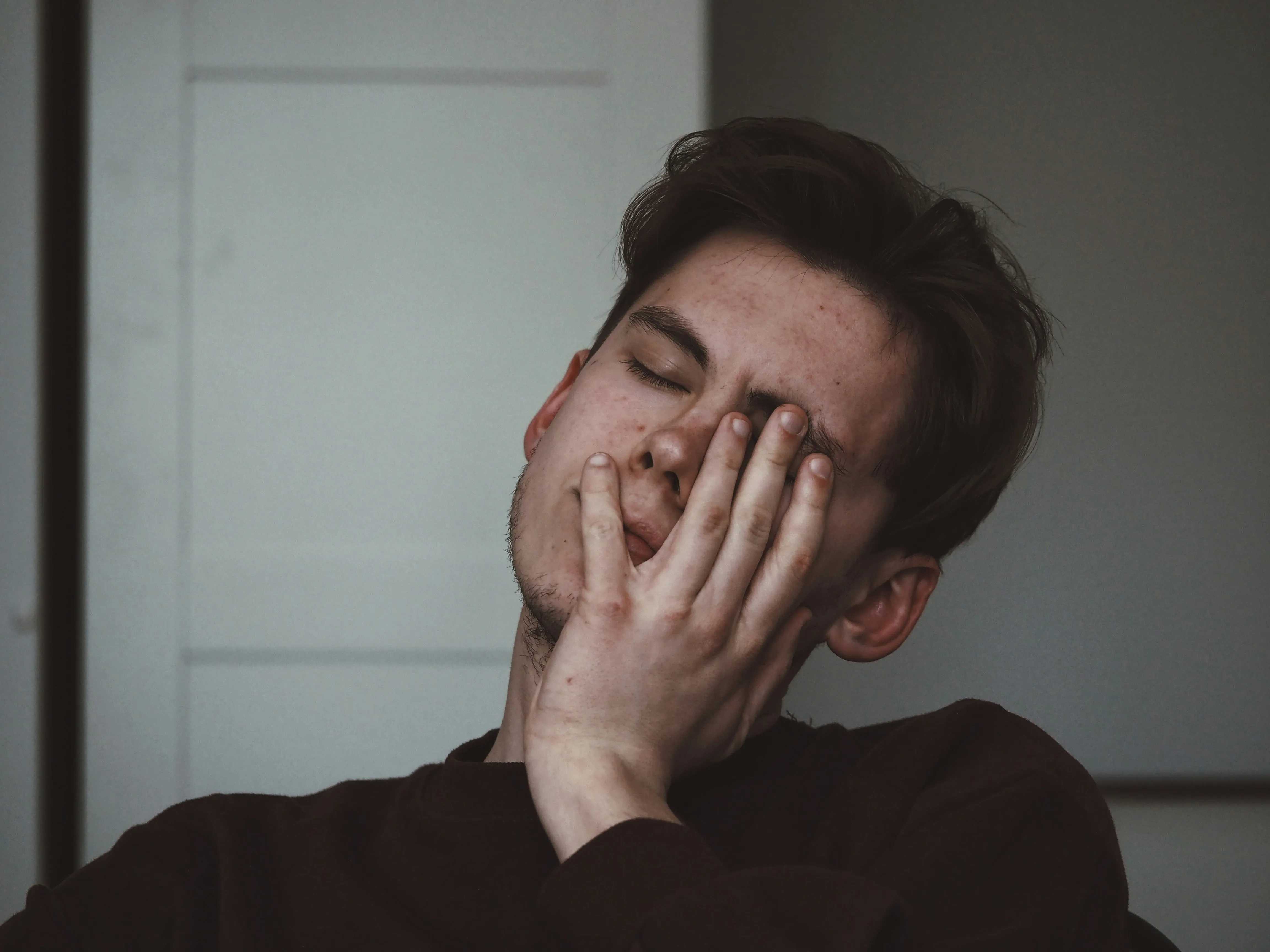
“The year is nearly over, but this tiredness will not go away.”
If that is how you feel, it is not just your imagination.
In fact, around 66% of people feel more tired than in previous years at year-end. After the holiday period, 62% say their tiredness has not cleared, with an impact lasting around a week, according to surveys.
Hidden fatigue builds unnoticed amid December’s busyness. Ignoring it can affect your start to the new year.
This article explains why year-end fatigue builds and practical ways to reset it before the year ends, including findings about dry head spa at HITOYASUMI, five minutes from Nagoya Station, for a healthier holiday season.
Three reasons year-end fatigue builds
1. More overtime and deadline pressure
The pressure to finish everything before the year ends often leads to more overtime. Japan’s monthly average is reported as 23.90 hours, though some industries exceed 36 hours.
When long working hours continue, the fatigue substance adenosine accumulates in the brain, causing reduced concentration and chronic sluggishness. In desk work, supporting the head’s 5–6 kg weight places two to three times the load on the neck muscles and can also cause headache, stiff shoulders and tired eyes.
2. Year-end and New Year parties disrupt routines
A 2024 survey reported an average of 0.59 year-end parties, with over 40% of men in their 30s–50s planning a work-related one.
Alcohol at gatherings may initially help you fall asleep, but it can substantially reduce overall sleep quality. As alcohol breaks down, the brain’s arousal response becomes dominant, preventing deep sleep (REM sleep). Its diuretic effect also increases the number of times you wake at night, leaving you feeling that you slept but your fatigue has not gone away.
3. Temperature-change fatigue
From November to December in Nagoya, the average temperature falls from 15.3°C at the beginning of the month to 10.0°C by the end, a difference of about 5°C or more. Add differences between indoors and outdoors, and the autonomic nervous system must switch frequently. The resulting overwork makes fatigue more likely to accumulate.
Sluggishness, headaches, shoulder tension, dizziness, insomnia or irritability may appear. Cold-related neck and shoulder stiffness can reduce circulation and trigger tension-type headache or migraine.
Check your hidden fatigue
Hidden fatigue means tiredness accumulating in mind and body without clear awareness. Take care if three or more of the following apply.
- [ ] Not feeling refreshed on waking
- [ ] Sleepy around four hours after waking
- [ ] Unable to concentrate on anything
- [ ] Irritated by small things
- [ ] Waking repeatedly at night
- [ ] Appetite increases or decreases
- [ ] Continuing stiff shoulders or headaches
- [ ] Falling asleep immediately on the commute
Notice these signs and respond early.
Three habits to start before the year ends
Habit 1: the 90-minute-before-bed rule for sleep quality
Bathe 1.5–2 hours before bed
Allowing time for body temperature to fall naturally, the best time to bathe is 1.5–2 hours before bed. The ideal guide is water at 40–42°C for around 10–15 minutes. Immersing the whole body firmly up to the neck promotes circulation throughout the body and balances the autonomic nervous system.
Keep bed and waking times consistent
To regulate your body clock (circadian rhythm), it is very important to go to bed and get up at the same times every day. Getting up at the same time on holidays as on weekdays makes it easier to enter deep sleep.
Prepare the bedroom
Warm-colored bedroom lighting and limiting phone use and caffeine before bed improve sleep quality.
Habit 2: food choices for recovery
Busy year-end schedules can make it easy to neglect meals, but balanced nutrition is important for recovering from fatigue.
B vitamins, especially B1
They convert carbohydrates into energy and support metabolism. Pork, eel and bonito are rich sources; eating them with onion, garlic, Chinese chives or ginger allows more effective absorption.
Citric acid
It acts as a “starting switch” that keeps energy metabolism running smoothly. Vinegar, citrus fruits and pickled plums are rich sources.
Protein
It is an important nutrient for activating cells. Make a conscious effort to eat chicken breast, fish, tofu and similar foods.
Overeating and drinking during the holiday season can strain the stomach and intestines. That makes choosing easy-to-digest meals especially important.
Habit 3: five-minute neck, shoulder and head release
For desk-work fatigue, a five-to-10-minute break each hour with gentle movement is recommended.
Neck stretch
- Sit in a chair and straighten your back
- Slowly tilt your neck to each side, breathing deeply for 15 seconds on each side
- Gently tilt your neck forward and backward, holding each position for 15 seconds
Shoulder-blade stretch
- Interlace your fingers in front of your chest and reach forward to spread the shoulder blades
- Then interlace your fingers behind your back and stretch, drawing the shoulder blades together
- Hold each movement for 10 seconds
Temporalis massage
The temporalis muscles tense when you clench your teeth firmly, causing muscle fatigue that can lead to headaches. Gently massaging around the temples in circles with your fingers eases this tension.

Scientifically demonstrated: dry head spa’s fatigue-recovery effects
So far we have introduced self-care you can do at home. Receiving professional treatment is also effective for resetting accumulated year-end fatigue all at once.
Brain waves: more alpha and theta activity with relaxation
Brain-wave measurements carried out under the supervision of Professor Hideho Arita, emeritus professor at Toho University School of Medicine and a leading serotonin researcher, identified particular alpha-2 activity during dry head spa.
Stress-associated beta waves, which predominated before treatment, decreased after treatment, while relaxation-associated alpha activity increased substantially. This is similar to the state seen in meditation or light sleep and indicates deep relaxation.
Sleep: easier settling and more deep sleep
A 2015 study found that people receiving head massage fell asleep faster and spent longer in deep sleep. A 2018 study of 20 older adults also reported better sleep quality and less daytime sleepiness.
Autonomic care: supporting parasympathetic activity
By stimulating the many nerves and pressure points in the scalp, head massage encourages parasympathetic activity, which controls “rest mode” and has an important role in relaxation and deep sleep.
Improved circulation makes it easier for oxygen and nutrients to reach the brain. This calms sympathetic activity that has been overworked by prolonged computer or smartphone use, improving tension, insomnia and headaches.
Reduced cortisol, a stress hormone
A study of hand massage reported that 10 of 18 participants showed reduced cortisol release after massage. Dry head spa also promotes release of oxytocin, sometimes called the “happiness hormone,” and suppresses stress hormones.
Ease year-end fatigue at HITOYASUMI near Nagoya Station
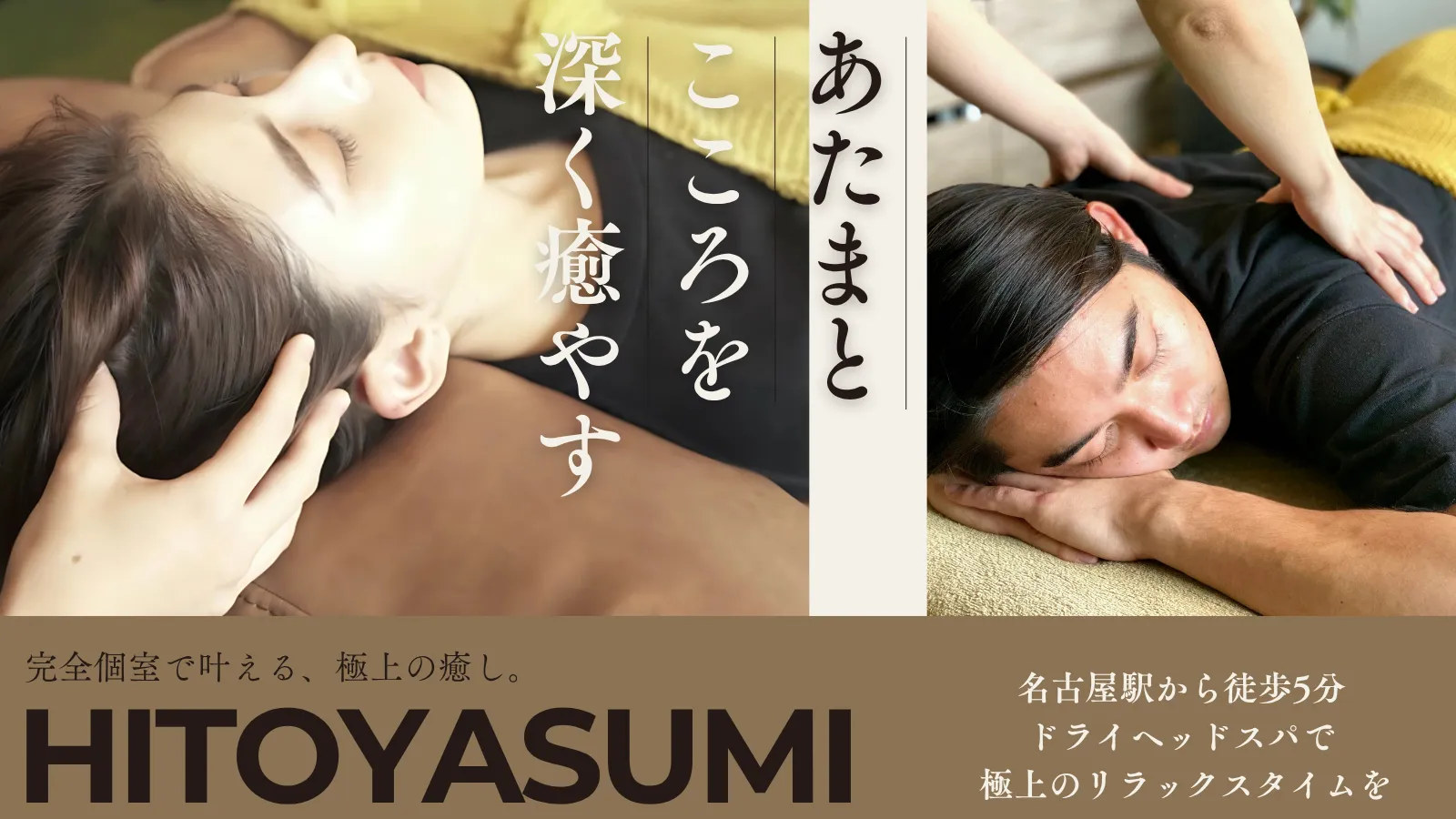
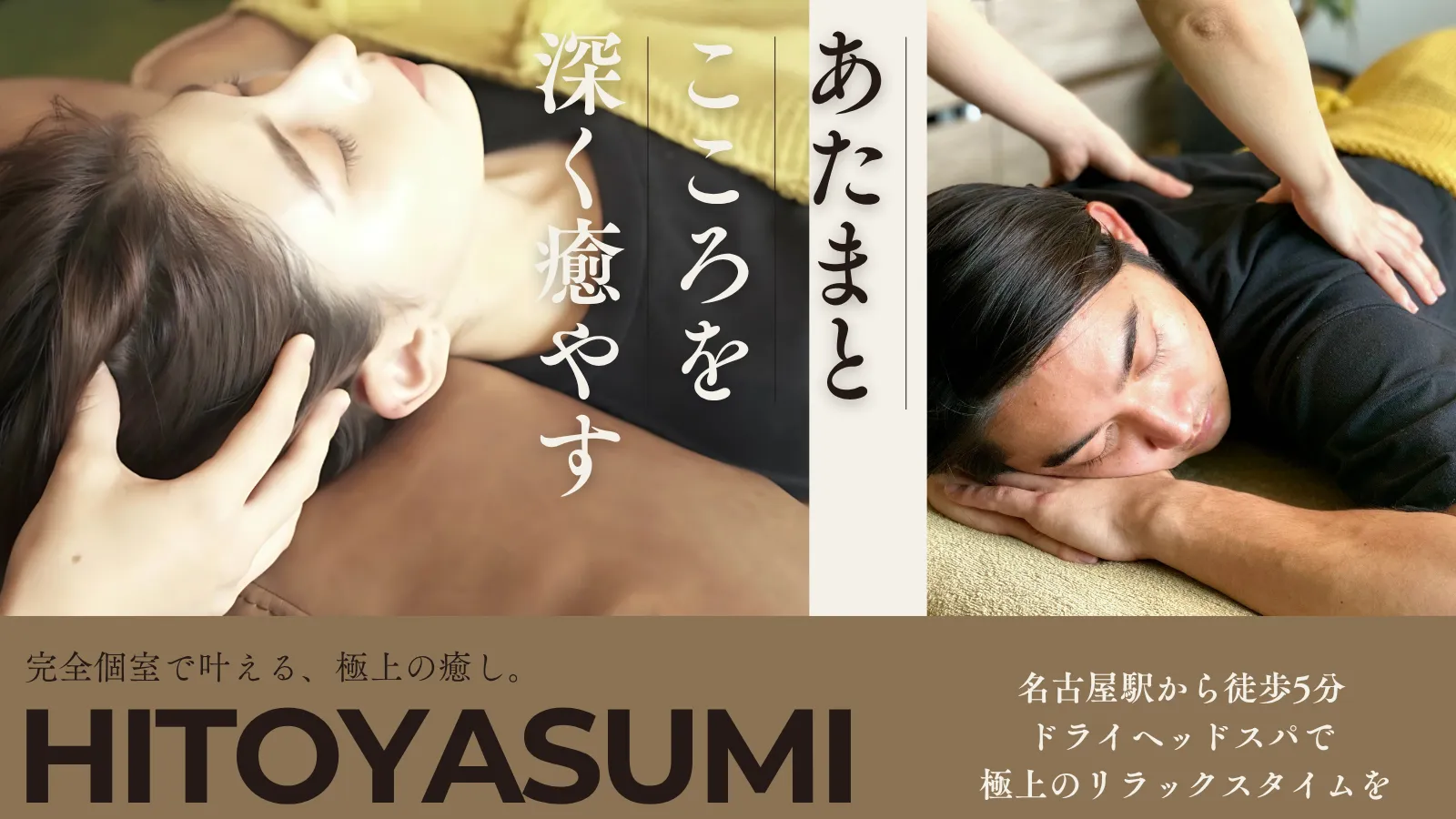
Five minutes from Nagoya Station, HITOYASUMI offers a completely private space for relaxation treatments centered on dry head spa.
Step away from year-end rush for a quiet, relaxing moment.
Regular care against accumulating fatigue
To make the most of relaxation care, regular visits once or twice monthly are recommended. This helps ease the fatigue and muscle tension that build up in daily life and prevent discomfort from returning.
The body’s cells are said to be replaced by new cells on a cycle of around 28 days (four weeks, or about one month). Receiving treatment in line with this cycle lets you aim for fundamental improvement in your physical constitution.
Book early for year-end and New Year
Many people seek a year-end reset, so appointments can fill quickly. Book early if you want to leave your fatigue behind before the year ends and welcome the new year feeling refreshed.
Leave year-end fatigue behind and begin the new year well
Year-end fatigue results from overlapping factors: increased overtime, disrupted routines from year-end parties, and fatigue caused by temperature differences. Data indicate that around 66% feel more tired than in previous years, and the effects last for a week into the new year.
Do not ignore hidden fatigue. Try these three habits before the year ends:
- Improve sleep quality(the 90-minute-before-bed rule)
- Food supporting recovery(B vitamins, citric acid and protein)
- Five-minute head, neck and shoulder release
For accumulated fatigue, also consider dry head spa. Research has confirmed a variety of effects, including changes in brain waves, improved sleep quality, regulation of the autonomic nervous system and reduced stress hormones.
Visit HITOYASUMI, a five-minute walk from Nagoya Station, to ease year-end fatigue and welcome the new year feeling refreshed. Enjoy a deeply relaxing time in a completely private space.
The holiday period can be busy, so please book early.