2026
Mar
04
Tired eyes: why dry head spa may help and five self-care ideas

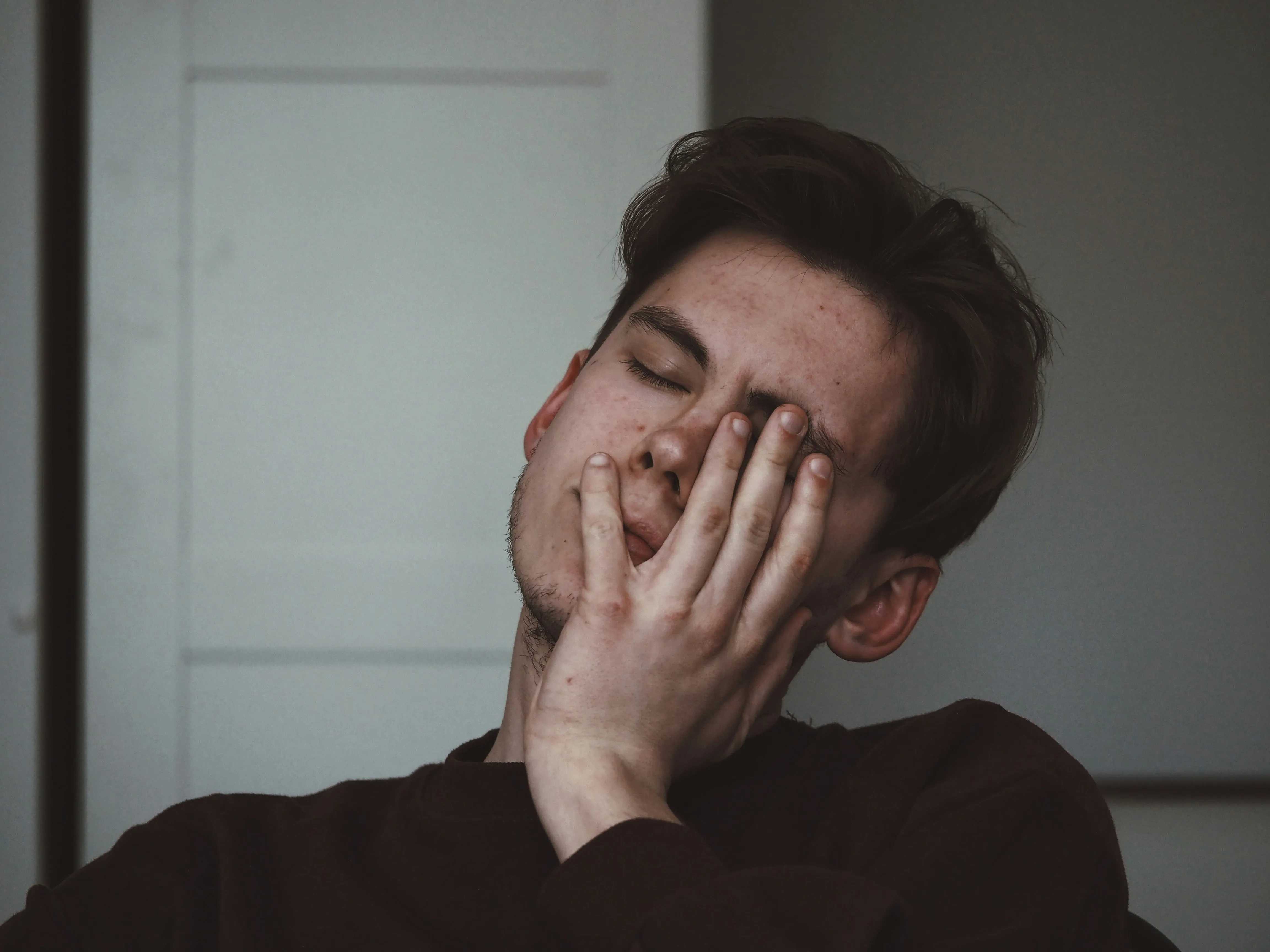
“By evening, screen text blurs and I cannot read it.”
“There is a dull heaviness behind my eyes, and even my temples hurt.”
“Even with eye drops, my eyes soon feel tired again.”
Do these symptoms sound familiar?
This may be more than ordinary tired eyes: persistent eye strain.
Eye strain is not only an eye problem. Tight muscles in the head, neck and shoulders very often reduce circulation and make eye fatigue worse.
Eye drops or a warm eye mask alone may therefore not address all the contributing factors.
If desk work or smartphone use puts a strain on your eyes, read on for how eye strain develops and ways to ease it.
Could the head be contributing to tired eyes?
Ordinary tired eyes and persistent eye strain differ
First, distinguish ordinary tired eyes from persistent eye strain.
Ordinary eye fatigue usually clears after a good night’s sleep.
On the other hand, Persistent eye strain does not clear with rest and can extend to headache, stiff shoulders, nausea or dizziness throughout the body.
Dismissing it as only tired eyes can allow a persistent cycle of discomfort; early care matters.
VDT syndrome: screen-related discomfort
The physical and mental discomfort caused by prolonged use of computer and smartphone screens is called VDT syndrome, or Visual Display Terminal syndrome.
Japanese health ministry guidelines also address it. Typical symptoms include:
Eye symptoms: blurred vision, dry eyes, redness or difficulty focusing
Physical symptoms: headache, neck or shoulder tension, lower-back pain or numb hands
Mental symptoms: irritability, poor concentration or insomnia
Take particular care if you spend six or more hours a day at a computer. Blinking during screen use is said to fall to about a third of normal, letting tears evaporate and leaving the eye surface dry and vulnerable.
Eyes, head, neck and shoulders work as a team
Tired eyes and head, neck and shoulder tension are closely connected.
Certain muscles move in coordination with your eyes. These are the suboccipital muscles, deep at the base of the skull.
These small muscles fine-tune head position with eye movement. In other words, using your eyes continuously means these muscles keep working too.
The temple area’s temporalis muscles also matter. They easily stiffen from clenching or stress; when they do, circulation throughout the head worsens and the blood supply to the eyes decreases.
For fuller relief of tired eyes, it is essential to relax the head, neck and shoulder muscles as well as caring for the eyes.
Three reasons dry head spa may help eye strain
Reason 1: directly relaxing the temporalis and suboccipital muscles
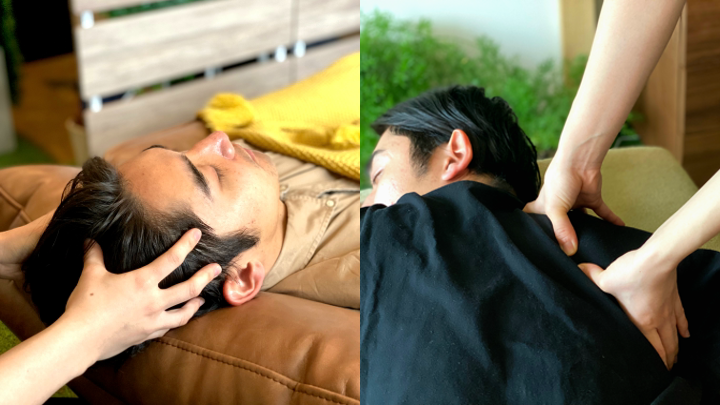
A key dry head spa feature is direct care for head muscles.
Hands-on techniques carefully relax the temporalis, suboccipitals and frontalis: muscles closely associated with tired eyes.
As muscle tension eases, compressed vessels can open and circulation around the eyes improves all at once. This helps explain reports of brighter vision and less heaviness behind the eyes afterwards.
Reason 2: supporting autonomic balance
While you look at a computer or phone, your eyes constantly adjust their focus. The muscles inside the eyes responsible for this are the ciliary muscles.
These muscles are controlled by autonomic activity, with parasympathetic activity for near vision and sympathetic activity for distance.
Long periods viewing nearby screens can therefore affect autonomic balance.
Comfortable head stimulation during dry head spa encourages parasympathetic activity and autonomic balance. Naturally falling asleep reflects the move into relaxation mode.
Reason 3: a mental off-switch for visual fatigue
Of the information processed by the brain, around 80% is said to be visual.
At a computer, the brain continually processes large amounts of visual information. Tired eyes can mean the mind is tired too.
During dry head spa, eyes are closed in a dark, quiet room, blocking incoming information. With visual input paused, the brain regions processing vision can finally rest.
This is genuine rest for eyes and mind, unlike a break spent looking at a phone.
Five eye-care habits to start today
Combine dry head spa with everyday self-care.
1. The 20-20-20 rule
A simple method recommended by the American Academy of Ophthalmology.
Every 20 minutes, look six metres (20 feet) away for 20 seconds
This releases focusing tension. Set a 20-minute timer for computer work; simply looking out of a window is enough.
2. Pressure points: Fengchi, Tianzhu and Taiyang
The head and neck contain many pressure points that help relieve eye strain.
Fengchi: at the back hairline, in the hollow outside the neck muscles, for circulation
Tianzhu: just inward from Fengchi; improves circulation in the head and helps with tired eyes and headaches
Taiyang: the hollow at the temple; directly improves blood flow around the eyes
At each point, apply comfortable thumb pressure for five seconds, three times. This can be done at your desk.
3. Warm the eyes and neck with a towel
Warm a damp towel in the microwave for 30 seconds to one minute, then place it over the eyes.
Warmth widens blood vessels around the eyes and eases muscle tension. If you have time, apply the towel to the back of your neck too, to help relax the suboccipital muscles.
Just five minutes during lunch can make a considerable difference to how your eyes feel in the afternoon.
4. Blink deliberately
When viewing a screen, blinking can fall to around one-third of normal. Tears evaporate, leading to dryness and worsening eye strain.
Once an hour, close the eyes firmly for five seconds, then open. Repeat three times to encourage tears and restore moisture to the surface.
5. Review your desk setup
It is easily overlooked, but the desk setup can worsen eye strain in many cases.
Screen distance: at least 40–50 cm away
Screen height: slightly below eye level, around 10–20 degrees
Screen brightness: similar to the surroundings
Room lighting: avoid reflections on the screen
Even small adjustments can make a big difference to the strain on your eyes.
Frequently asked questions
Q. Can dry head spa ease severe eye strain?
A. Many guests report clearer vision and less heaviness behind the eyes. By directly working on the head and neck muscles that cause eye strain, the treatment can address underlying tension that eye drops or warm eye masks cannot reach.
Q. Which course length do you recommend for tired eyes?
A. Start with the 75-minute dry head spa (¥5,980). Thorough care extending to the neck, shoulders and décolletage sufficiently relaxes the tension from head to shoulders that causes tired eyes. The 105-minute course with back myofascial release is also popular for especially painful shoulder tension.
Q. Can I keep contact lenses in?
A. We recommend removing contact lenses during treatment. Closed eyes can leave lenses dry. Bring a storage case or replacement daily lenses.
Q. How often should I come?
A. For desk workers, once every two to four weeks. Ideally, combine daily self-care with regular professional treatment to ease accumulated fatigue. Try one session first and see how your body responds.
Q. Can I come straight after work?
A. Of course. Suits or casual clothes are fine. Five minutes from Nagoya Station, we are easy to visit after work and open until 21:00 on weekdays.
Q. Can men visit?
A. Of course. HITOYASUMI is a private salon welcoming all genders. Many men visit with desk-work fatigue or persistent eye strain.
About HITOYASUMI
Eye drops do not help, or screens become hard to see by evening.
For these concerns, consider a new approach to eye strain that starts with treating the head as a whole.
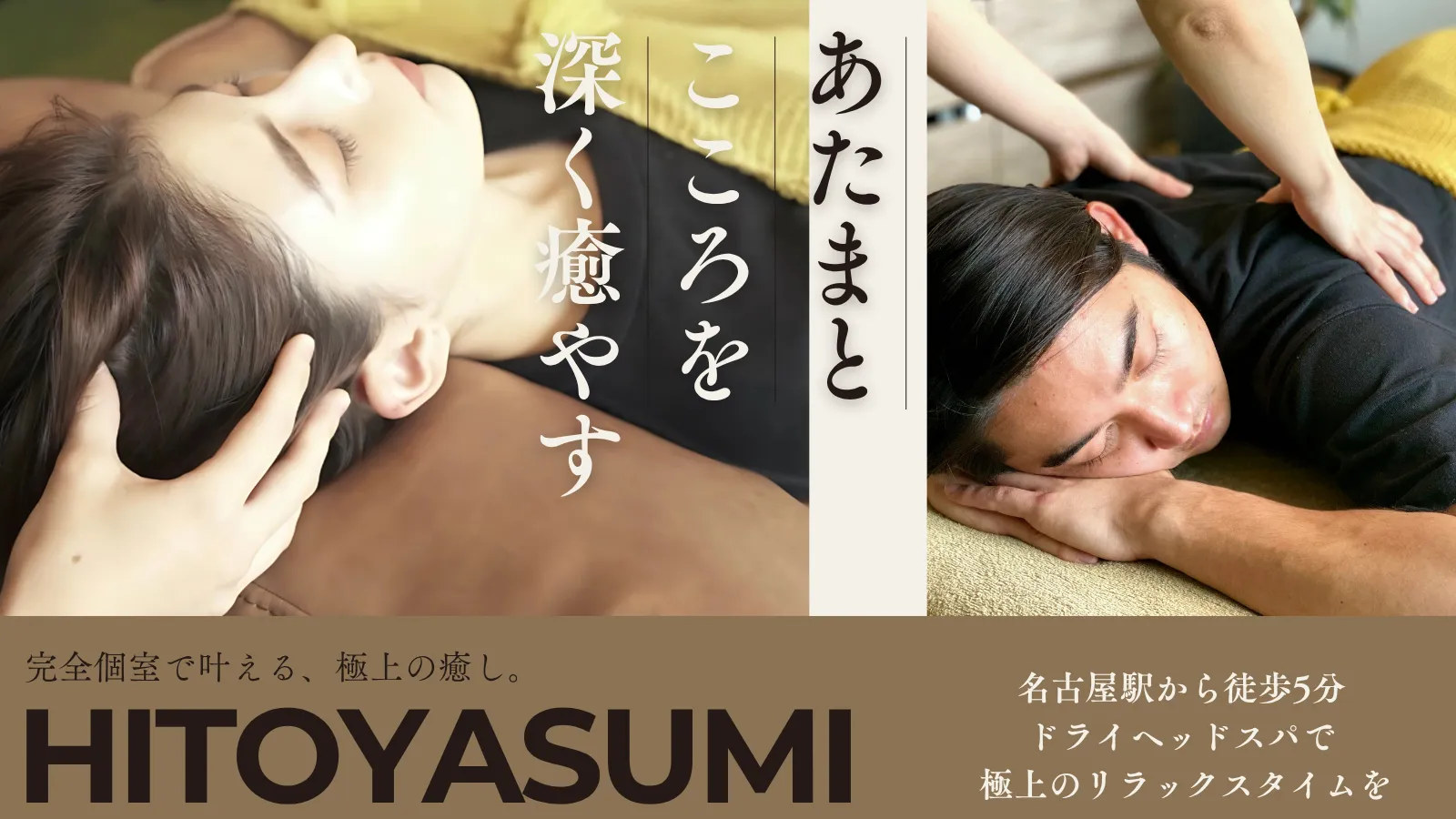
Five minutes from Nagoya Station, our green, completely private space lets eyes, head and mind rest together.
Recommended treatments
Dry head spa (75 min), ¥5,980
Thorough neck, shoulder and décolletage care: a standard starting course for tired eyes.
Head spa & customised care (95 min), ¥8,280
For especially severe eye fatigue: personalised care focusing on the temples and the area around the eyes.
Dry head spa & back myofascial release (105 min), ¥8,980
For eye strain together with shoulder tension and a tight back, care extends from head to back to address fatigue throughout the body.
Salon information
Address: THE WHITE OISE 201/301, 5-12 Takebashicho, Nakamura-ku, Nagoya, Aichi
Access: 5-minute walk from Nagoya Station
Opening hours: weekdays 12:00–21:00 / weekends and public holidays 11:00–20:00
Closed: year-end and New Year holidays
Phone:052-898-2851
Reservations: online or by phone
Conclusion
Eye strain is not just an eye problem.
Head, neck and shoulder tension, autonomic imbalance and visual-processing fatigue can combine to create that deep, heavy feeling behind the eyes.
Use the 20-20-20 rule and gentle point care daily, with professional head-focused care for accumulated fatigue.
A deeper refresh that eye drops cannot provide: why not try it?
HITOYASUMI invites you to take a little rest and leave your eyes, head and mind feeling lighter.