2026
Jun
15
Summer sluggishness and headaches from temperature changes or air conditioning: self-care and dry head spa

“My body has felt heavy since the rainy season began.”
“In air-conditioned rooms, I get headaches and stiff shoulders.”
“I struggle to fall asleep at night and still feel tired in the morning.”
Does any of that sound familiar?
You may not have a clear illness, yet feel sluggish every day. From the rainy season into summer, these hard-to-name discomforts tend to become more common.
That heaviness may be linked to temperature-change fatigue or air-conditioning-related discomfort and the strain they put on the autonomic nervous system.
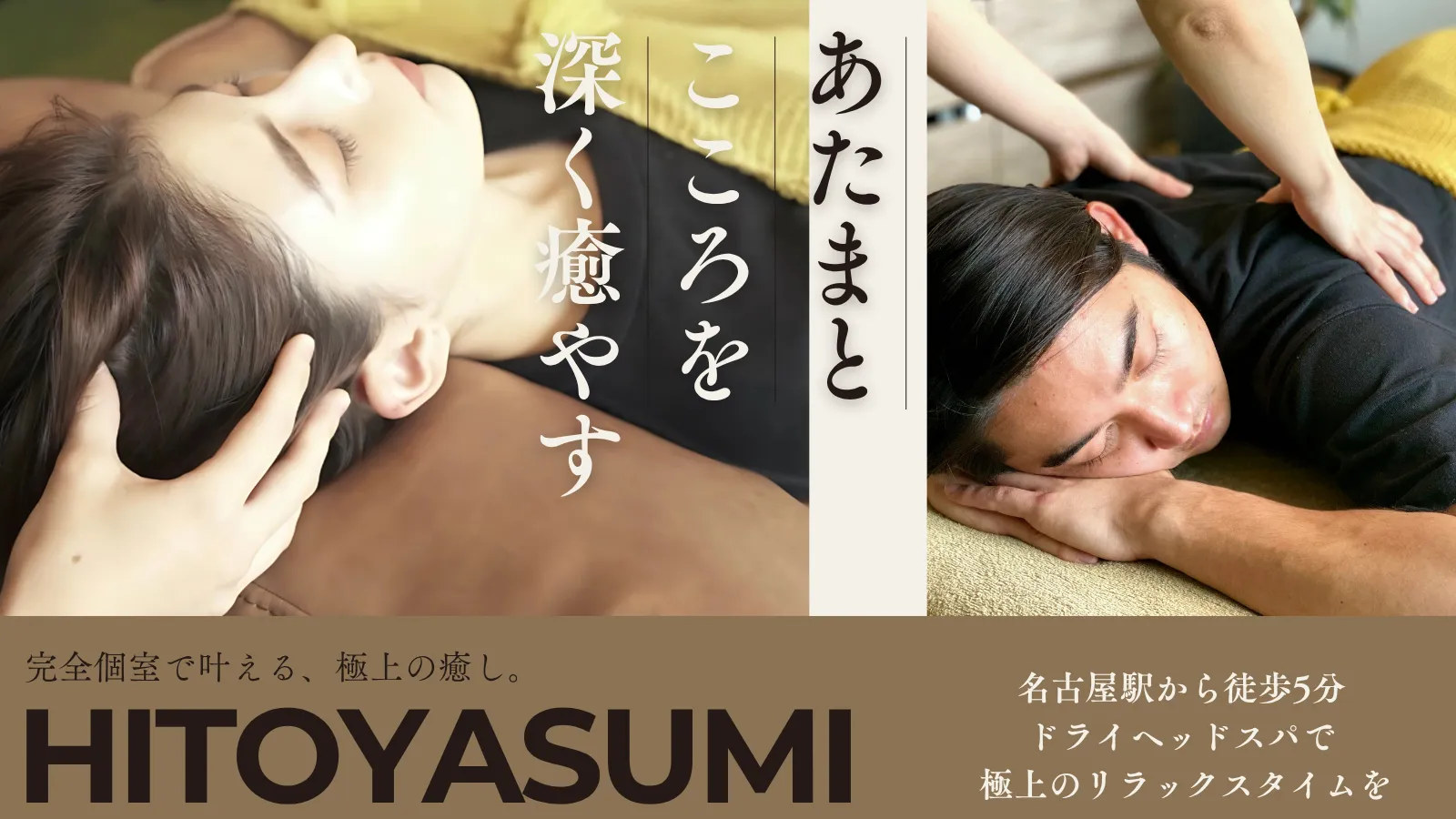
HITOYASUMI, a dry head spa and body care salon five minutes from Nagoya Station, explains how temperature-change fatigue and air-conditioning-related discomfort develop, self-care to try today, and how dry head spa relaxes the head to support autonomic balance.
Take a little rest from summer heaviness
HITOYASUMI offers dry head spa and body care five minutes from Nagoya Station. We open 12:00–21:00 on weekdays, with same-day bookings when available. Please ask us about a visit when sluggishness, a heavy head or stiff shoulders concern you.
Phone: 052-898-2851
Reservations and salon information: https://hitoyasumi.co/
Could temperature changes or air conditioning be behind your discomfort?
Discomfort from the rainy season into summer has several possible triggers. A major one is changing temperatures.
What is temperature-change fatigue?
Temperature-change fatigue is said to occur more easily with large differences within a single day or between indoors and outdoors; a temperature difference of at least 7°C is a useful guide.
Our bodies maintain a stable temperature by widening blood vessels and sweating when hot, then narrowing blood vessels to retain heat when cold. These adjustments are controlled by the autonomic nervous system.
In an environment with sharp temperature differences, repeated adjustments can place considerable strain on this system. Whole-body sluggishness, headaches, neck and shoulder tension, coldness and low mood are said to become more likely.
Rain makes temperatures fluctuate during the rainy season, while humidity is high, making it a season when more people notice temperature-change fatigue.
What is air-conditioning-related discomfort?
As summer approaches, air-conditioning-related discomfort is another concern.
Moving between cool indoor spaces and hot outdoors exposes the body to large temperature differences. Staying in an overly cold room or repeatedly moving in and out can tire the autonomic nervous system and make temperature regulation less effective.
Common signs include persistent sluggishness, headache, shoulder tension, cold hands and feet, swelling, digestive discomfort, and difficulty falling or staying deeply asleep. It is sometimes described medically as a state close to autonomic dysfunction.
Those who spend long periods in places such as offices or trains where they cannot control the temperature may accumulate fatigue without noticing.
It differs slightly from weather-related pain
Rainy-season discomfort may make you think of pain or illness associated with low atmospheric pressure.
Weather-related pain is primarily triggered by changes in atmospheric pressure, whereas temperature-change fatigue and air-conditioning-related discomfort are mainly triggered by temperature differences. Both involve the autonomic nervous system, but the triggers differ.
If changes in atmospheric pressure concern you, see this related article.
Related: Rainy-season headaches and weather-related discomfort: coping with dry head spa
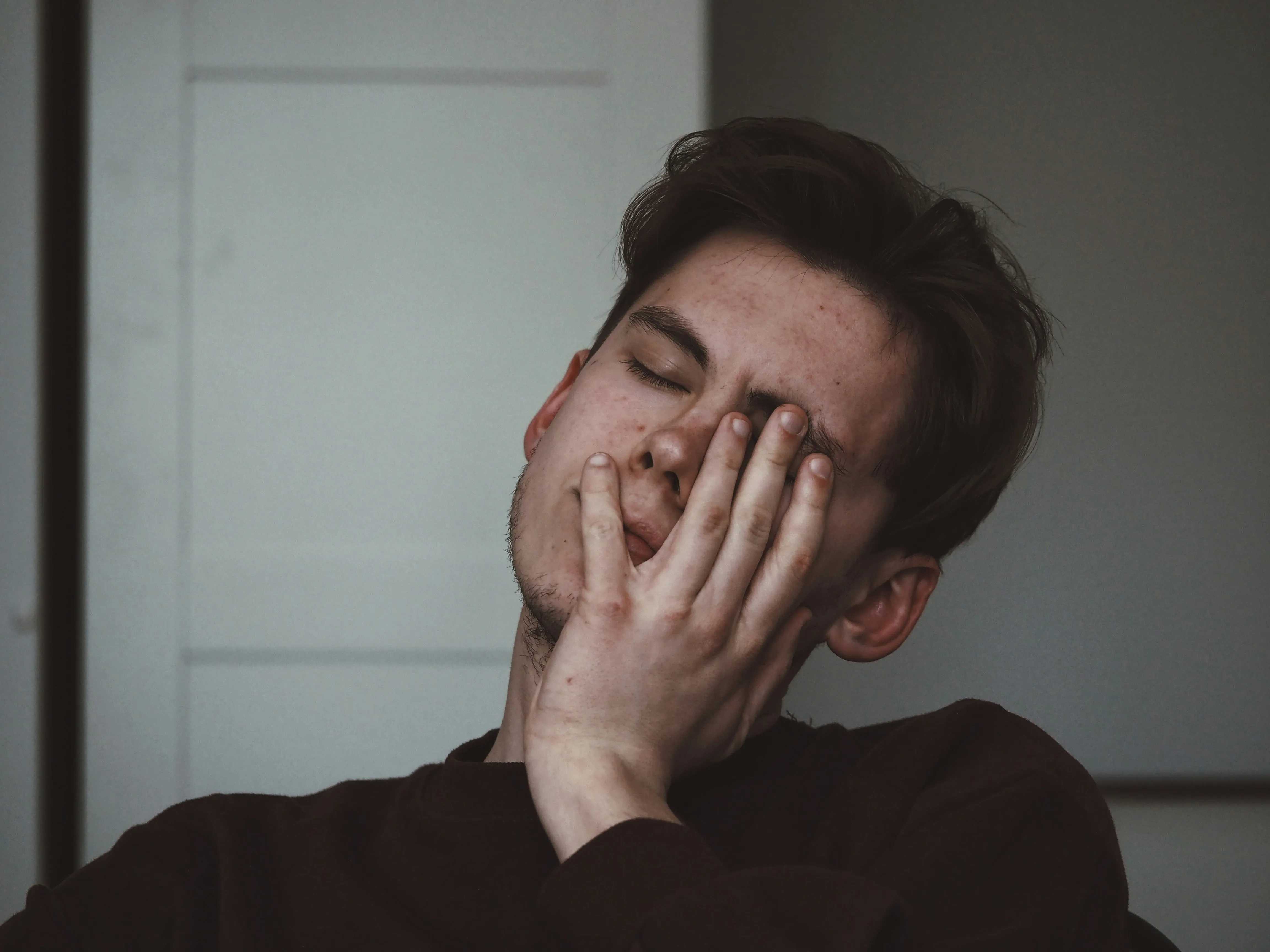
Do you recognise these signs?
Temperature-change fatigue and air-conditioning-related discomfort are often overlooked because they do not present as a clearly defined illness. Do these signs feel familiar?
- A heavy body whenever rainy or air-conditioning season arrives
- Headaches or stiff shoulders in air-conditioned rooms
- Cold hands, feet or lower body, with swollen legs towards evening
- Difficulty falling asleep, waking at night, or not feeling refreshed in the morning
- Reduced appetite or unsettled digestion
- Low spirits or unexplained irritability
These may be signs that the autonomic nervous system is working too hard.
If even one applies, paying a little attention to avoiding excessive cooling and giving your autonomic nervous system some rest may make daily life more comfortable.
If a severe headache persists, you have numbness or a high fever, or symptoms do not improve over time, consult a medical provider rather than relying on relaxation care.
Five self-care habits to try today
The keys are to avoid excessive cooling and create time for the autonomic nervous system to rest. Here are five things to try today.
1. Aim for an indoor–outdoor difference of no more than 5°C
Use 26–28°C as a guide for air conditioning and avoid an excessive difference from outdoors. Where you cannot adjust the thermostat, such as at work, use a jacket or lap blanket for comfort.
2. Avoid direct cold airflow and keep your neck and ankles warm
Direct cold air can chill the body quickly. Adjust airflow and protect the neck, wrists and ankles with a cardigan, socks or a scarf.
3. Take a warm bath rather than only a shower
About 10 minutes in water at 38–40°C encourages circulation and eases coldness. Bathing one to two hours before bed is also recommended for settling to sleep.
4. Breathe deeply and keep a regular rhythm
Slow, deep breathing is said to encourage parasympathetic activity and help restore autonomic balance. Keeping waking, eating and sleeping times as consistent as possible also provides a foundation for a balanced autonomic nervous system.
5. Release tension in the head, neck and shoulders
Desk work and phone use can keep you in one position, tensing the head, neck and shoulders and slowing circulation. When you notice it, gently rotate your neck or raise and lower your shoulders to release tension regularly.
Related: Caring for the autonomic nervous system: five self-care ideas and dry head spa
For days when self-care is not enough
“I am trying, but the sluggishness will not go away.” On such days, make time for complete rest. HITOYASUMI is a private-room salon close to Nagoya Station.
Phone: 052-898-2851 / Reservations and salon information: https://hitoyasumi.co/
When fatigue remains: consider relaxing the head
Even with regular self-care, a busy routine can allow tiredness to build up.
Accumulated stress and fatigue can leave the scalp tense and hard. It is said that a tight scalp can restrict circulation and contribute to shoulder tension, a heavy head and low spirits.
Gently massaging the scalp can help mind and body relax, encourage parasympathetic activity and support autonomic balance. For people who find it hard to unwind at night, time spent relaxing the head may help.
Dry head spa at HITOYASUMI
HITOYASUMI’s concept is care for a tired mind.
Dry head spa uses no water or oil and does not wet the hair. We carefully provide hands-on care for the head, neck, shoulders and décolletage.
In a quiet private room with the calm of a deep breath in a forest, time spent doing nothing gives a tense mind some breathing room. It is a chance to let your hard-working autonomic nervous system gently rest.
HITOYASUMI is a relaxation salon, not a medical institution. We do not diagnose or treat medical conditions.
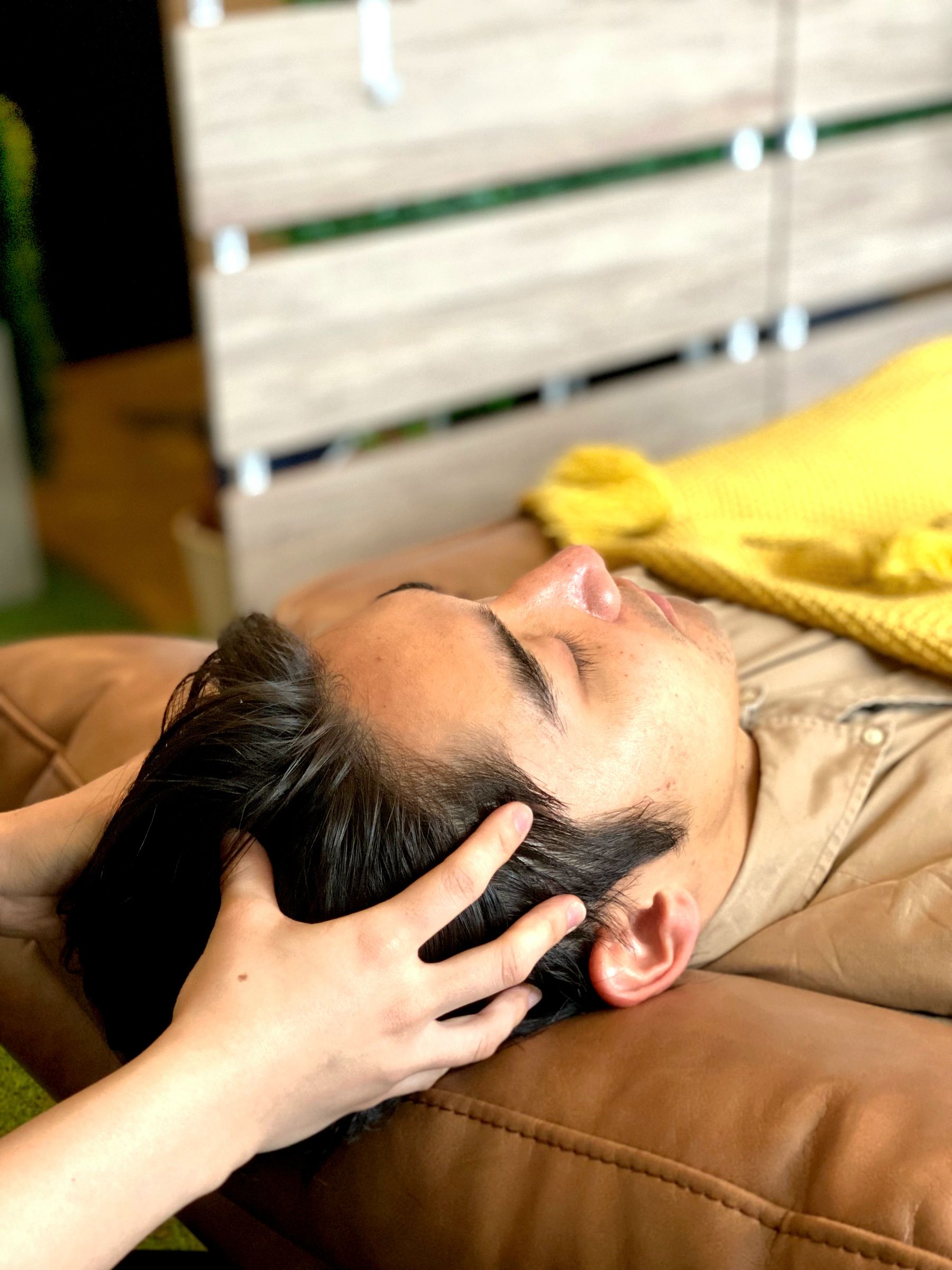
Choose a treatment by your concern
Temperature-change fatigue and air-conditioning discomfort vary by person. Choose according to the symptoms that concern you.
Your concern | Suggested treatment | Time | Price |
|---|---|---|---|
Heavy head, headache, neck and shoulder tension, or trouble settling to sleep | Dry head spa | 75 min | ¥5,980 |
You want to discuss care according to how you feel that day | Head spa & customised care | 95 min | ¥8,280 |
Strong shoulder tension extending into the back | Dry head spa & back myofascial release | 105 min | ¥8,980 |
Care for coldness, swelling and whole-body sluggishness together (women only) | Dry head spa & full-body lymphatic care and myofascial release | 135 min | ¥11,980 |
For a heavy head, headaches or difficulty sleeping, the basic 75-minute dry head spa is a straightforward starting point.
If you also want care for coldness, swelling and whole-body heaviness caused by air conditioning, we recommend the 135-minute course combining full-body lymphatic care and myofascial release (women only).
Related: Why head spa may ease a stiff neck: causes, self-care and professional treatment / Tired eyes: why dry head spa may help and five self-care ideas
Frequently asked questions
Q. Can head spa cure temperature-change fatigue or air-conditioning illness?
A. HITOYASUMI is not a medical institution and does not diagnose or treat illness. For sluggishness, a heavy head or shoulder tension, we offer relaxation care around the head, neck and shoulders and time for the autonomic nervous system to rest. If symptoms are severe or persist, please consult a medical provider.
Q. I get cold easily. Will I feel cold during treatment?
A. We pay attention to the room temperature. Blankets and temperature adjustments are available; please tell us when you arrive if coldness concerns you.
Q. How often should I visit?
A. Everyone accumulates fatigue differently. Some visit only at seasonal changes or busy times, while others choose regular maintenance. Our guide below explains suggested schedules for different goals.
Related: How often should you have head spa in 2026? Suggested schedules and how long effects last
Q. Can I make a same-day booking after work?
A. Yes, subject to availability. Check online or by phone. We open 12:00–21:00 on weekdays.
Q. What should I wear?
A. For dry head spa alone, everyday clothes or a suit are fine. A change of clothes is provided for courses including body care.
Related: What to wear to your first dry head spa: all your clothing questions answered
Q. Can men visit?
A. Yes. Men are welcome (the 135-minute full-body lymphatic and myofascial release course is women only). The completely private setting also helps first-time visitors feel at ease.
About HITOYASUMI
HITOYASUMI is a dry head spa and body care salon a 5-minute walk from Nagoya Station.
Our concept is care for a tired mind.
For anyone whose head, mind and body cannot rest amid a busy routine, we offer a quiet pause like taking a deep breath in a forest.
Salon information
Item | Details |
|---|---|
Location | THE WHITE OISE 201/301, 5-12 Takebashicho, Nakamura-ku, Nagoya, Aichi 453-0016 |
Opening hours | Weekdays 12:00–21:00 / weekends and public holidays 11:00–20:00 |
Closed | Year-end and New Year holidays |
Phone | 052-898-2851 |
Book | Online or phone bookings |
That persistent heavy feeling from the rainy season into summer.
Give your hard-working autonomic nervous system a little rest.
Take a pause at HITOYASUMI for a lighter start to tomorrow.
Reservations and enquiries
Please ask HITOYASUMI about a visit if sluggishness, a heavy head, shoulder tension, coldness or swelling concerns you.
Phone: 052-898-2851
Reservations and salon information: https://hitoyasumi.co/